



BC Transit HandyDART
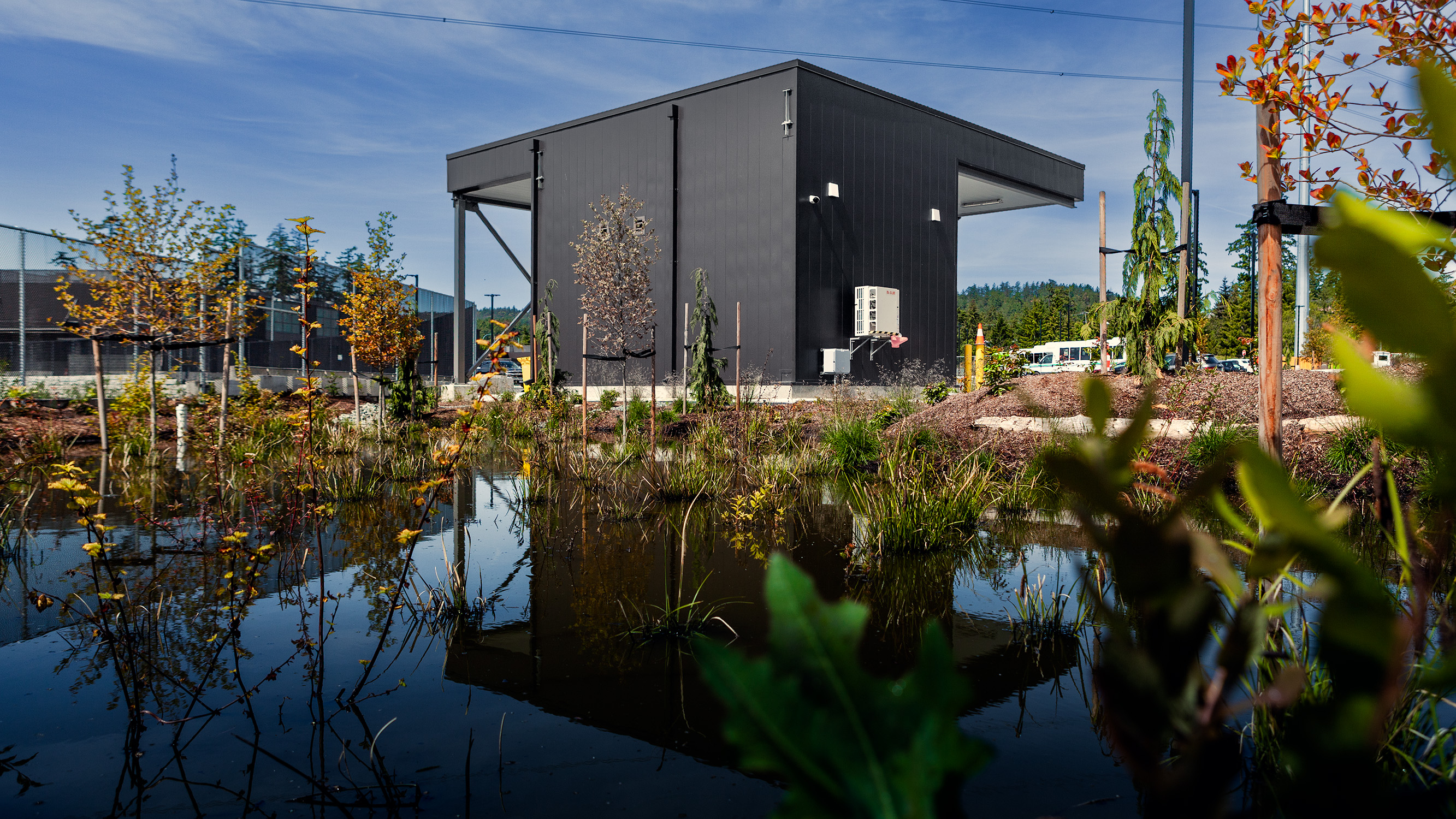
BC Transit’s handyDART Centre in View Royal supports an essential regional transit service on a heavily disturbed eight-acre site. MDI approached the landscape as more than the setting for an operations facility: it was an opportunity to repair land and water systems while meeting demanding requirements for bus movement, parking, security, maintenance, and neighbourhood fit.
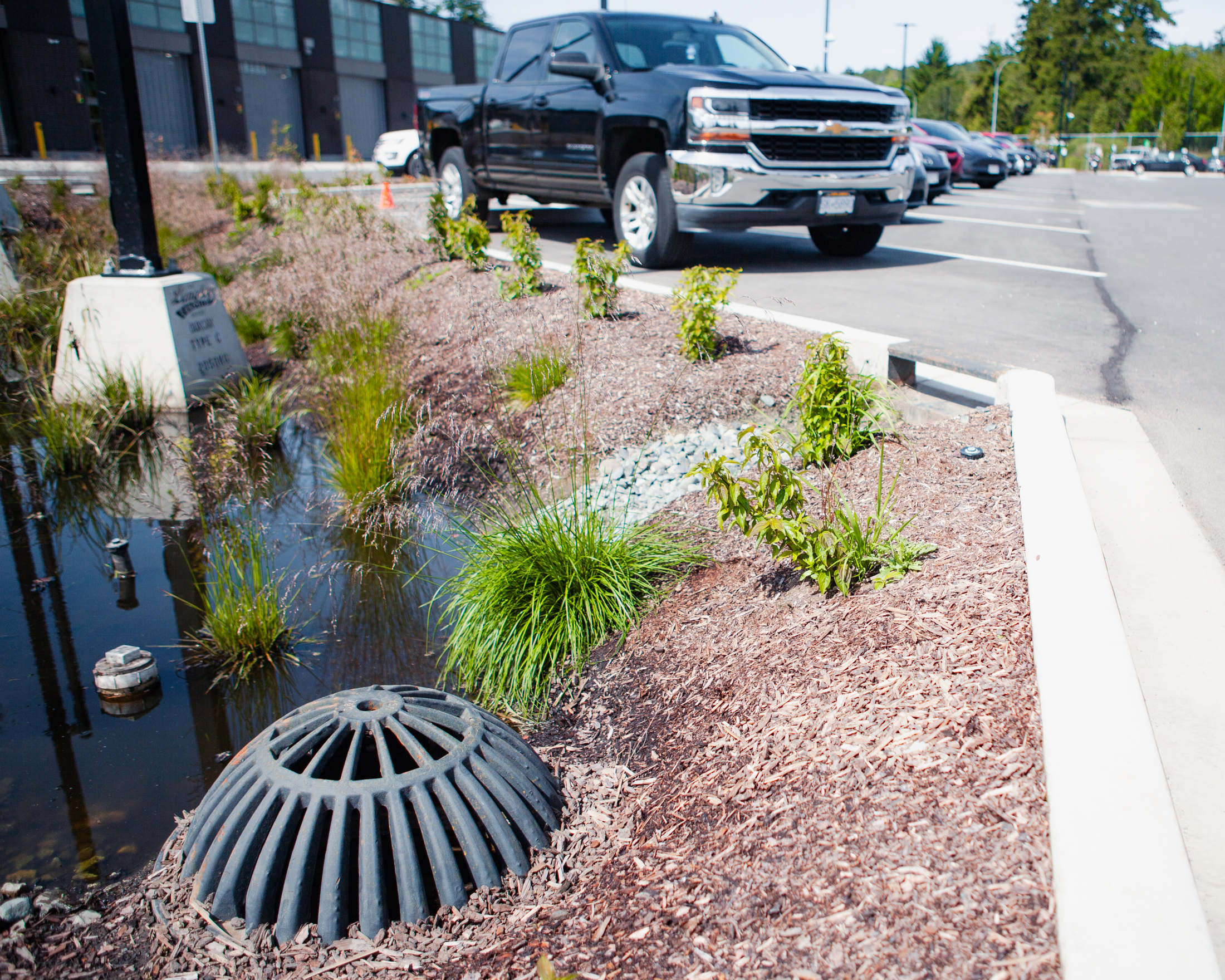
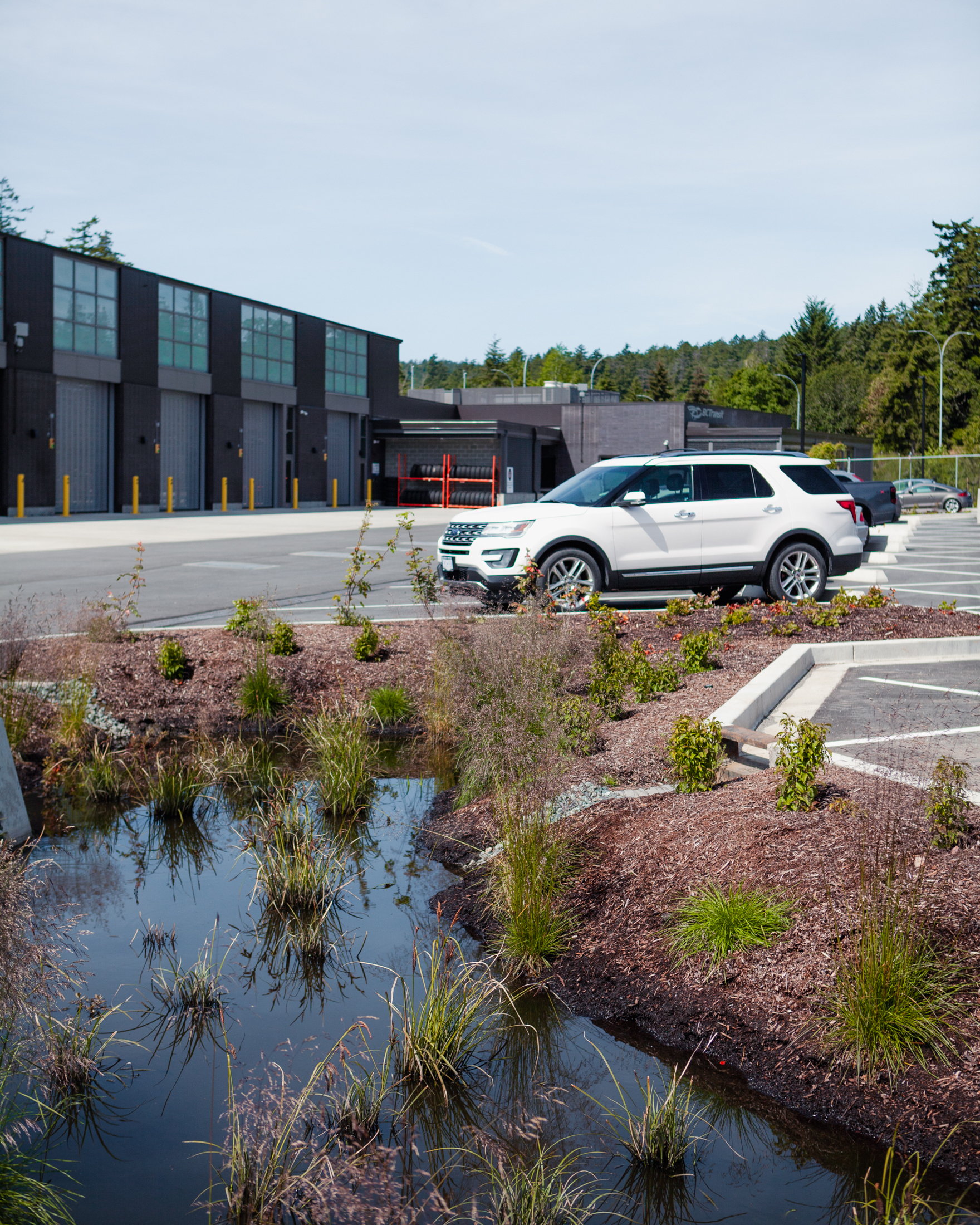
Early site investigation by MDI identified a seasonal stream connected to Craigflower Creek. MDI developed the design to realign and restore the stream along the site edge, creating more than an acre of protected habitat for amphibians, coho salmon, and other juvenile fish. Nine rain gardens slow and treat runoff from vehicle and building areas, while native planting, soil restoration, and trail improvements rebuild ecological structure around the working site.
Opened in 2025, the centre is BC Transit’s first LEED Gold facility and the first Salmon-Safe certified development on Vancouver Island. The project demonstrates that infrastructure serving people can also restore habitat, improve water quality, and contribute to the health of a wider watershed.
Let Restoration Organize the Working Site
Public Infrastructure contributes to a healthy Watershed
The centre’s operational footprint sits within a living drainage system connected to Craigflower Creek. Recognizing that relationship early allowed MDI to treat stream health, rainwater, bus circulation, security, and neighbourhood edges as parts of one site plan.
Align Ecology With Transit Operations
The stream corridor, rain gardens, planting, buildings, and vehicle areas were coordinated as an integrated system. The landscape supports the daily work behind accessible public transportation while improving water quality and creating a greener edge for the surrounding community.
Rebuild the Stream as Living Infrastructure
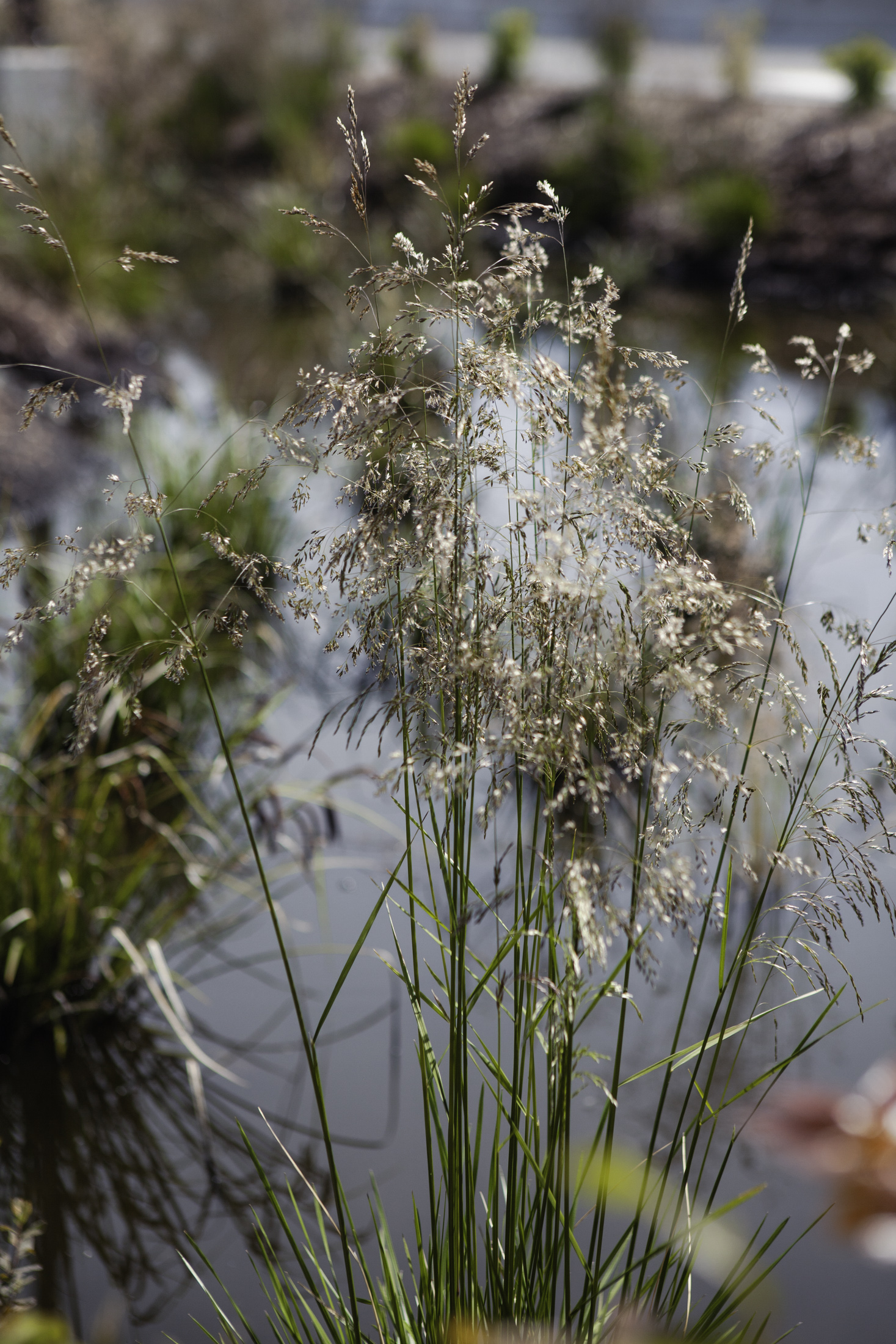
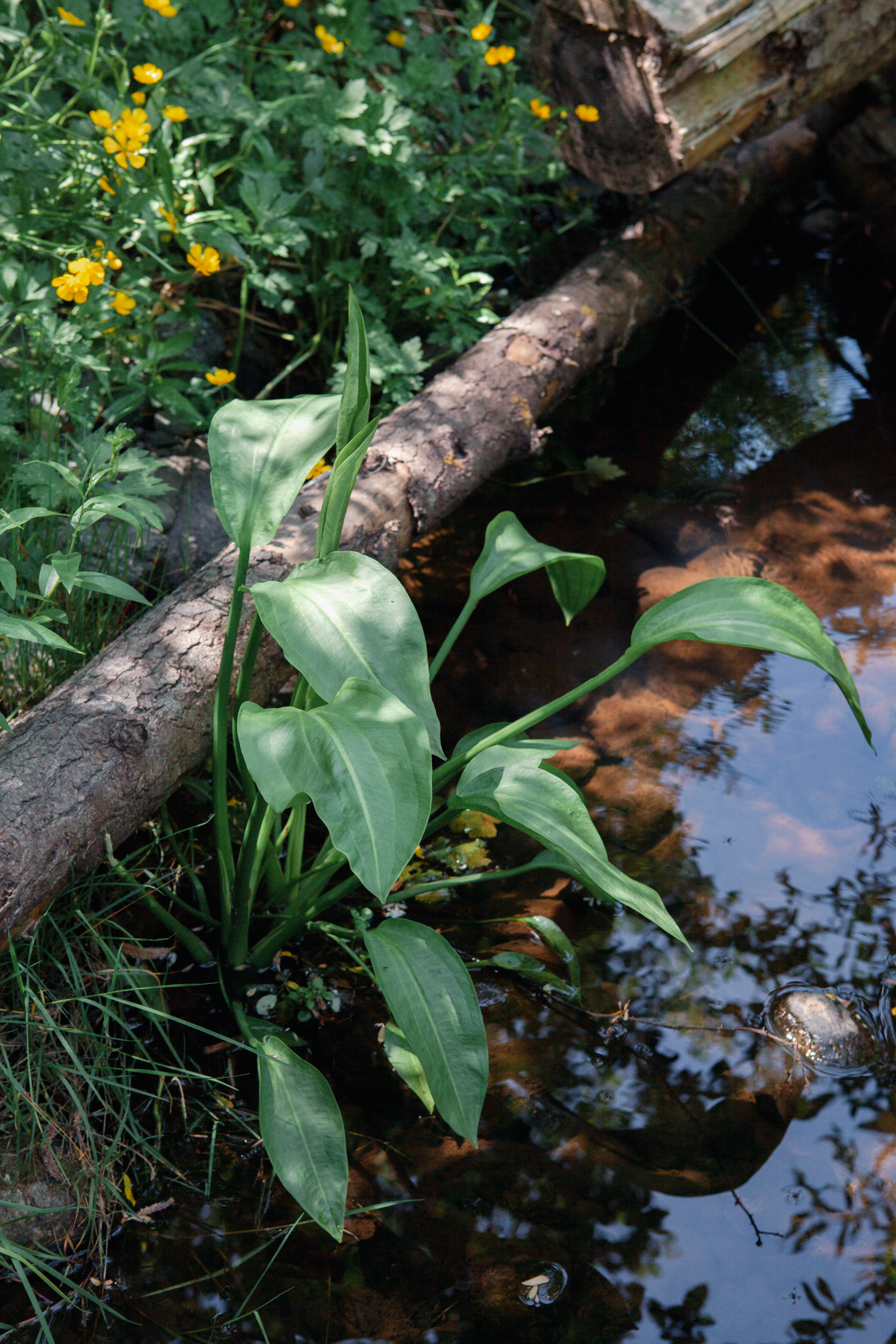
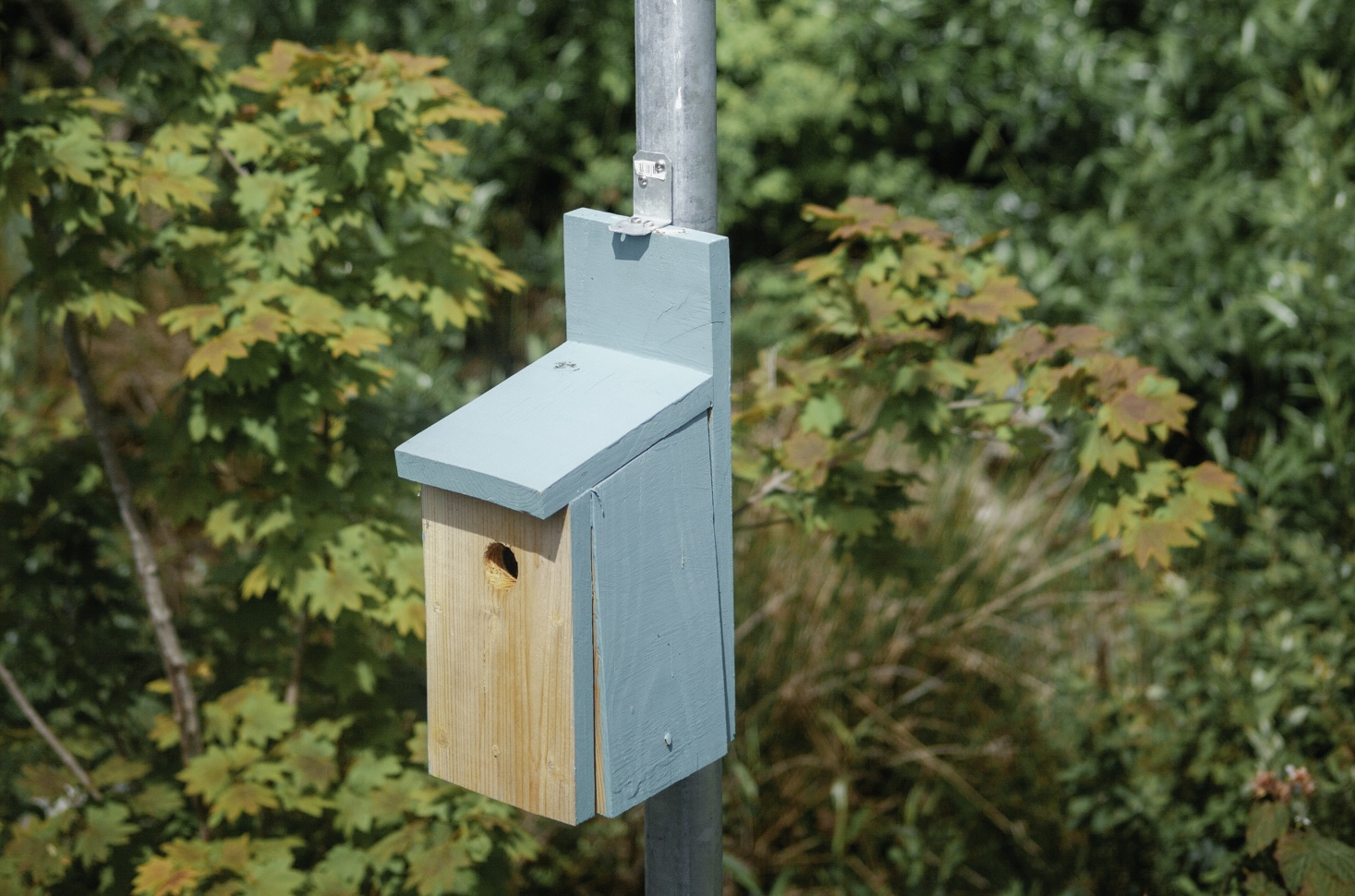
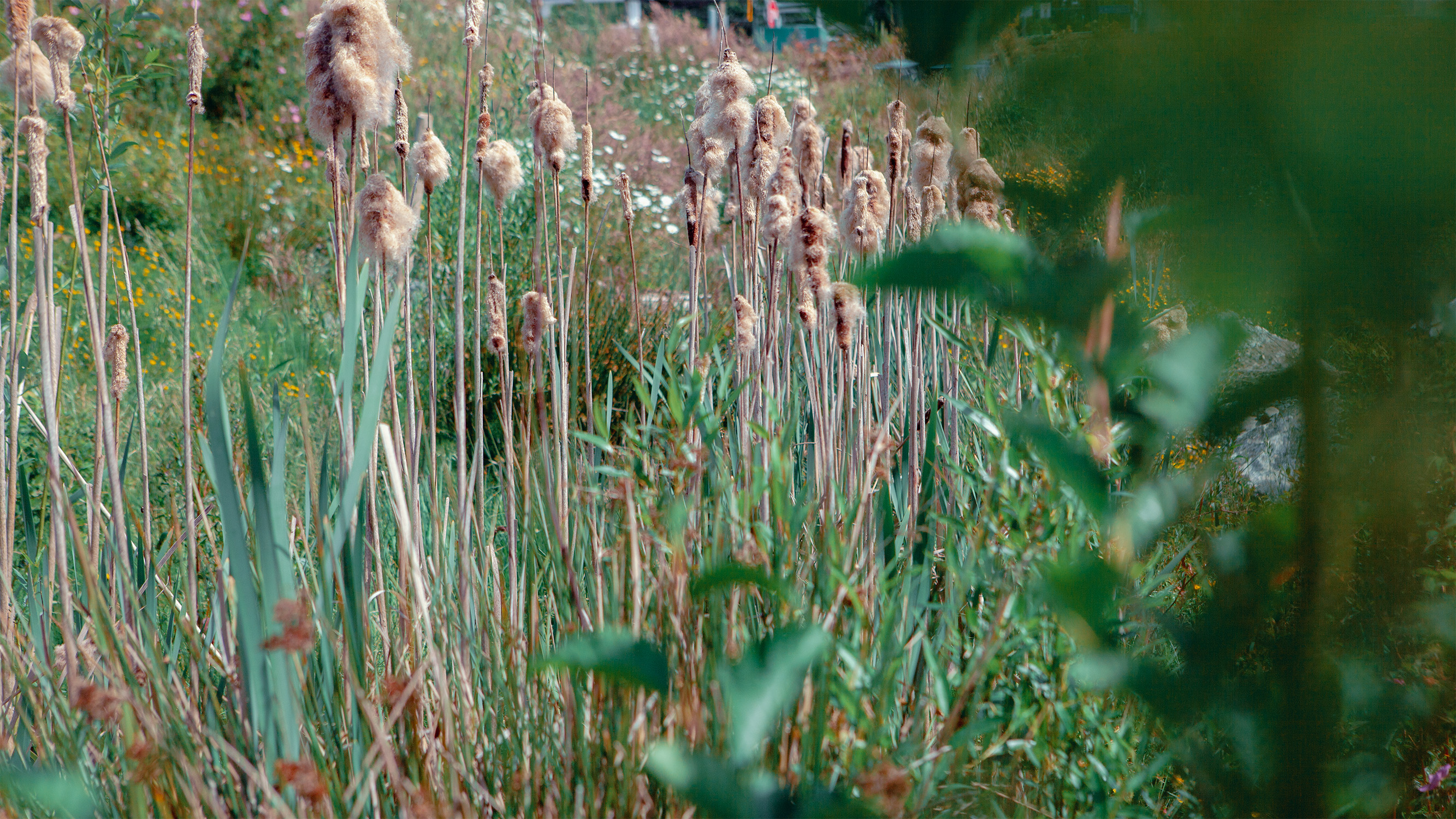
The seasonal stream was realigned and restored along the site edge, creating more than an acre of protected habitat. Nine rain gardens treat runoff from building and vehicle areas, and native planting and reused woody material add structure for fish, amphibians, pollinators, and other wildlife.
Design for Long-Term Performance
Restored soils, native planting, rain gardens, and the stream corridor were designed with maintenance and facility operations in mind. Together, they support the centre’s LEED Gold and Salmon-Safe performance while contributing to the Craigflower Creek watershed over time.
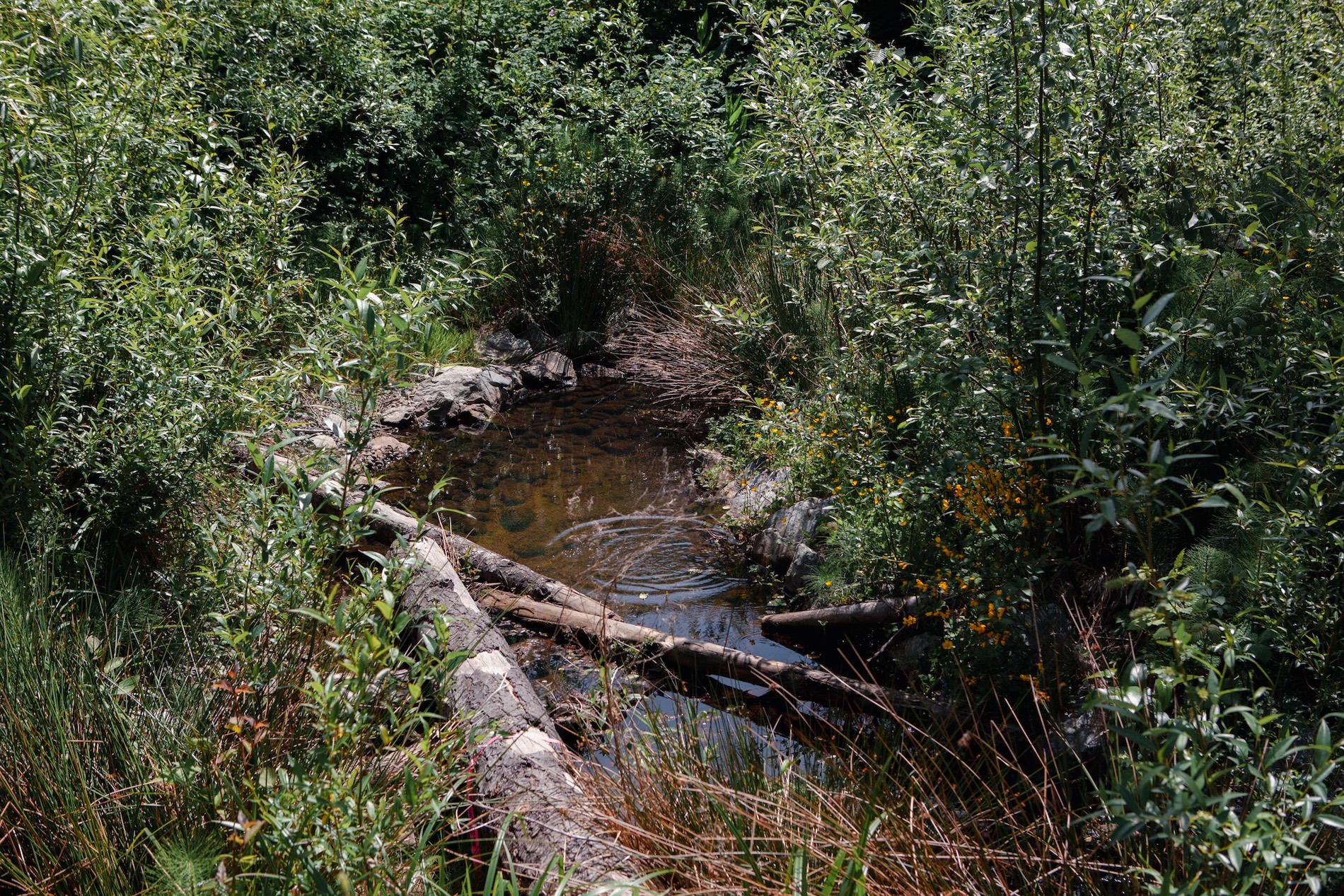
The handyDART Centre shows how a working infrastructure site can serve people and repair ecological systems at the same time. MDI aligned transit operations with stream restoration, rainwater treatment, habitat, and neighbourhood fit, making the landscape part of the facility’s public value rather than a separate layer around it.
Similar Projects