



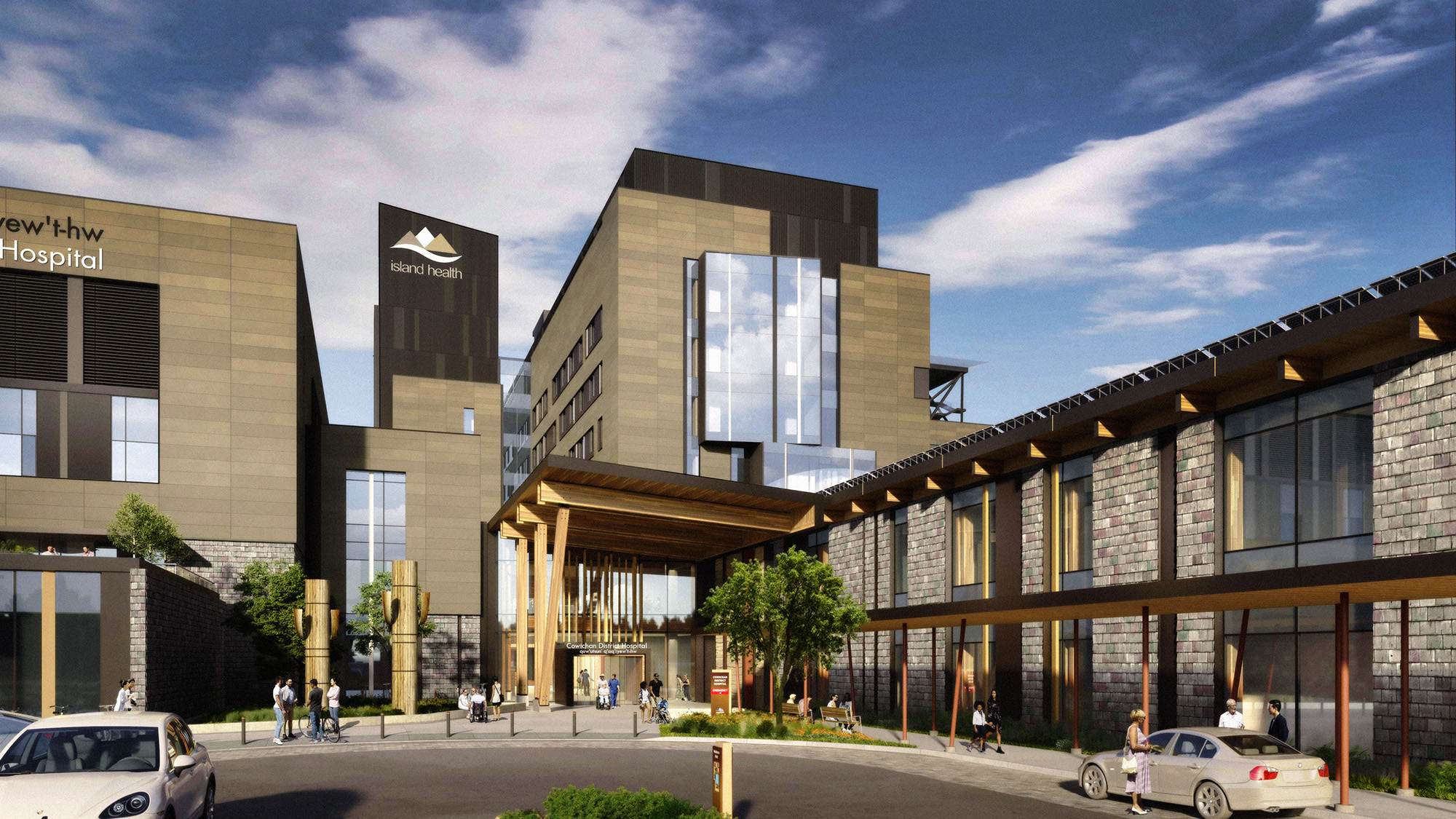
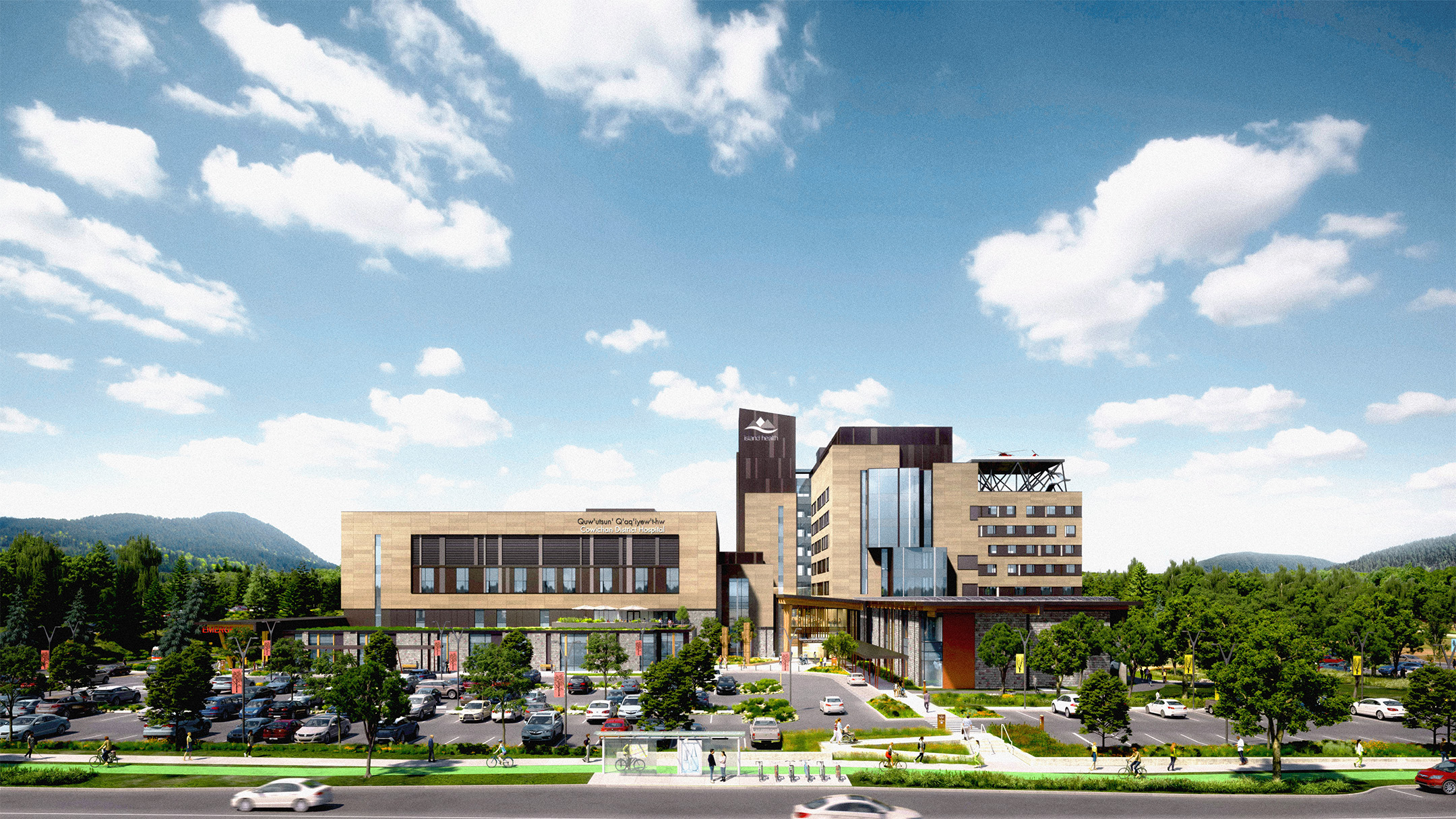
Quw’utsun Valley Hospital

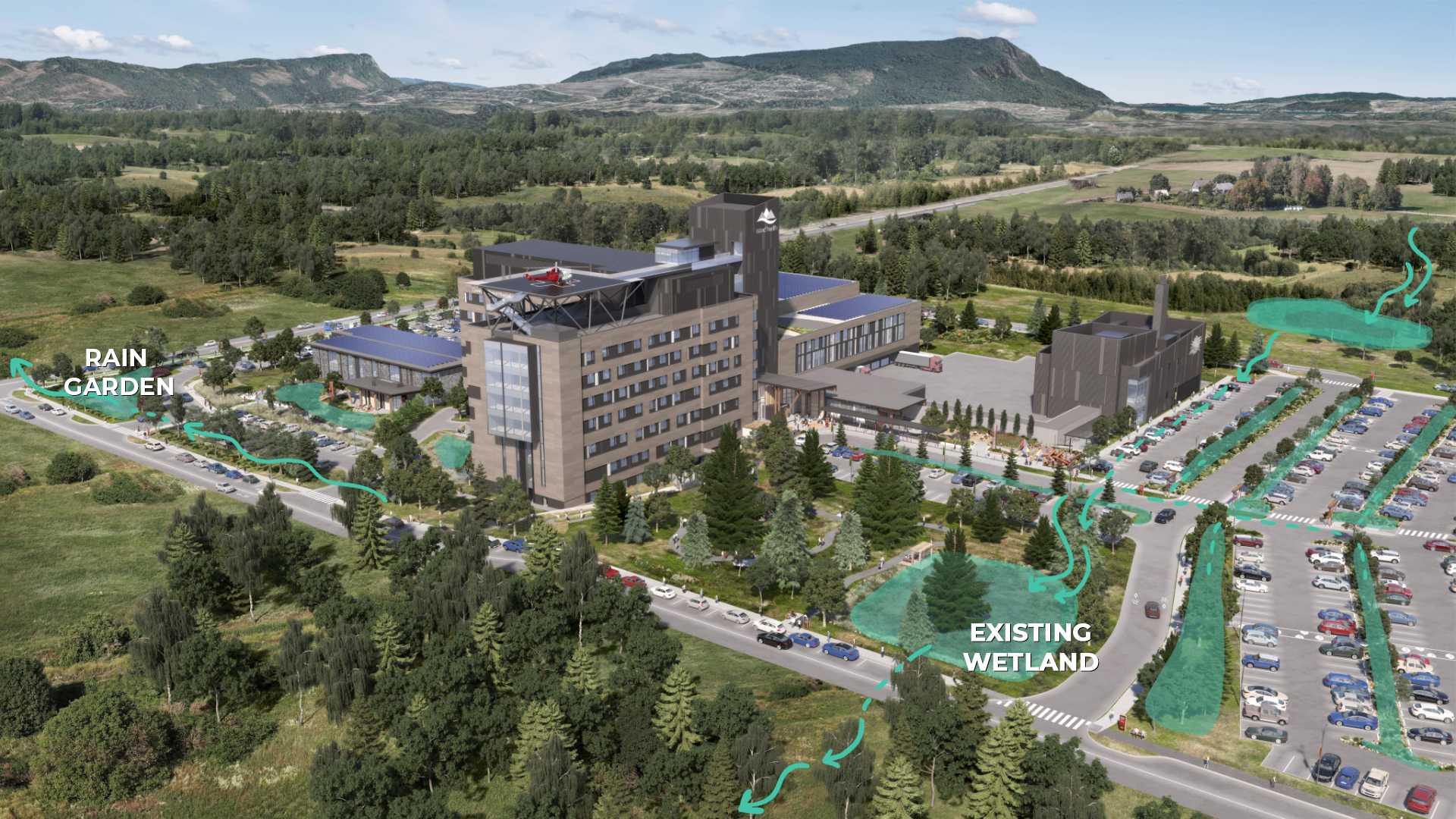
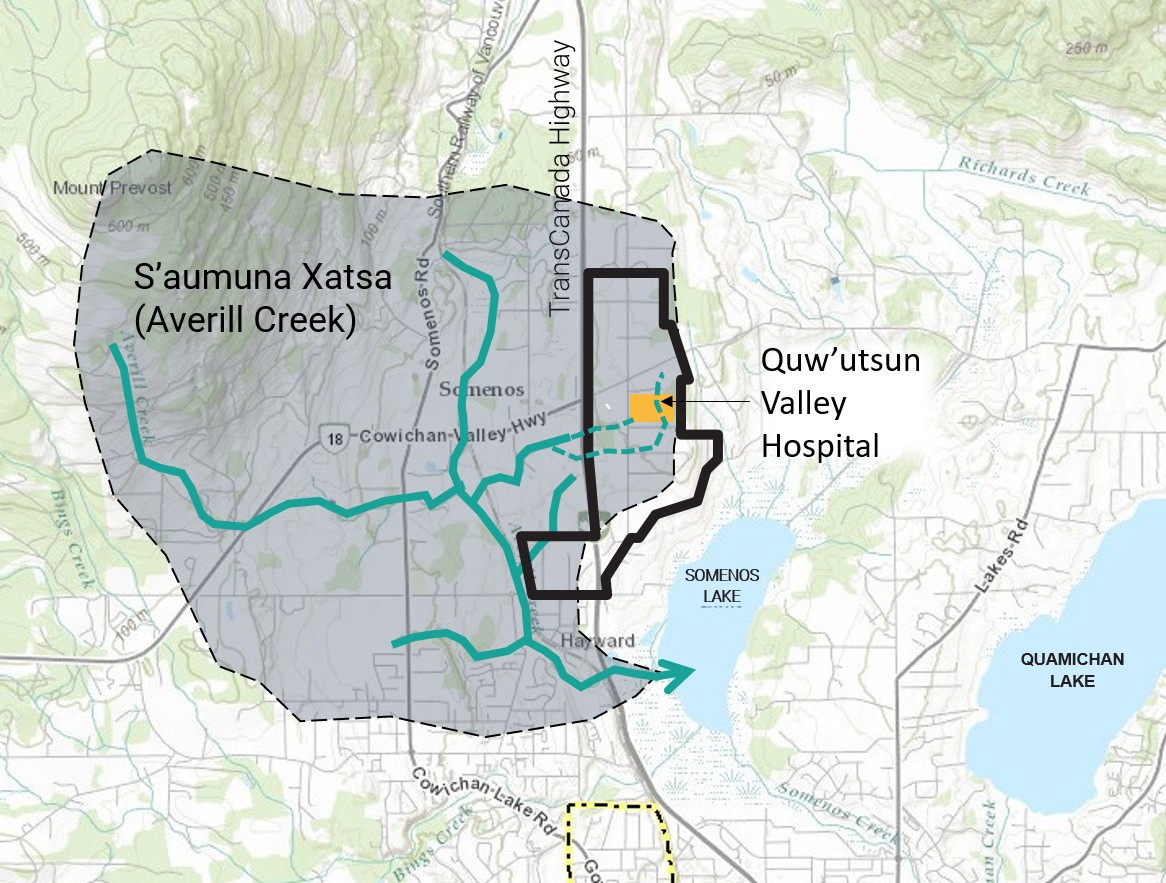
MDI began the project with watershed-scale analysis to understand how water moved across and beyond the hospital site. The work identified multiple subdrainage areas, wetlands, and direct connections to Averill Creek and the culturally important S’amunu Marsh. These findings allowed MDI to shape the site plan around the natural hydrology rather than treating rainwater as a separate engineering system.
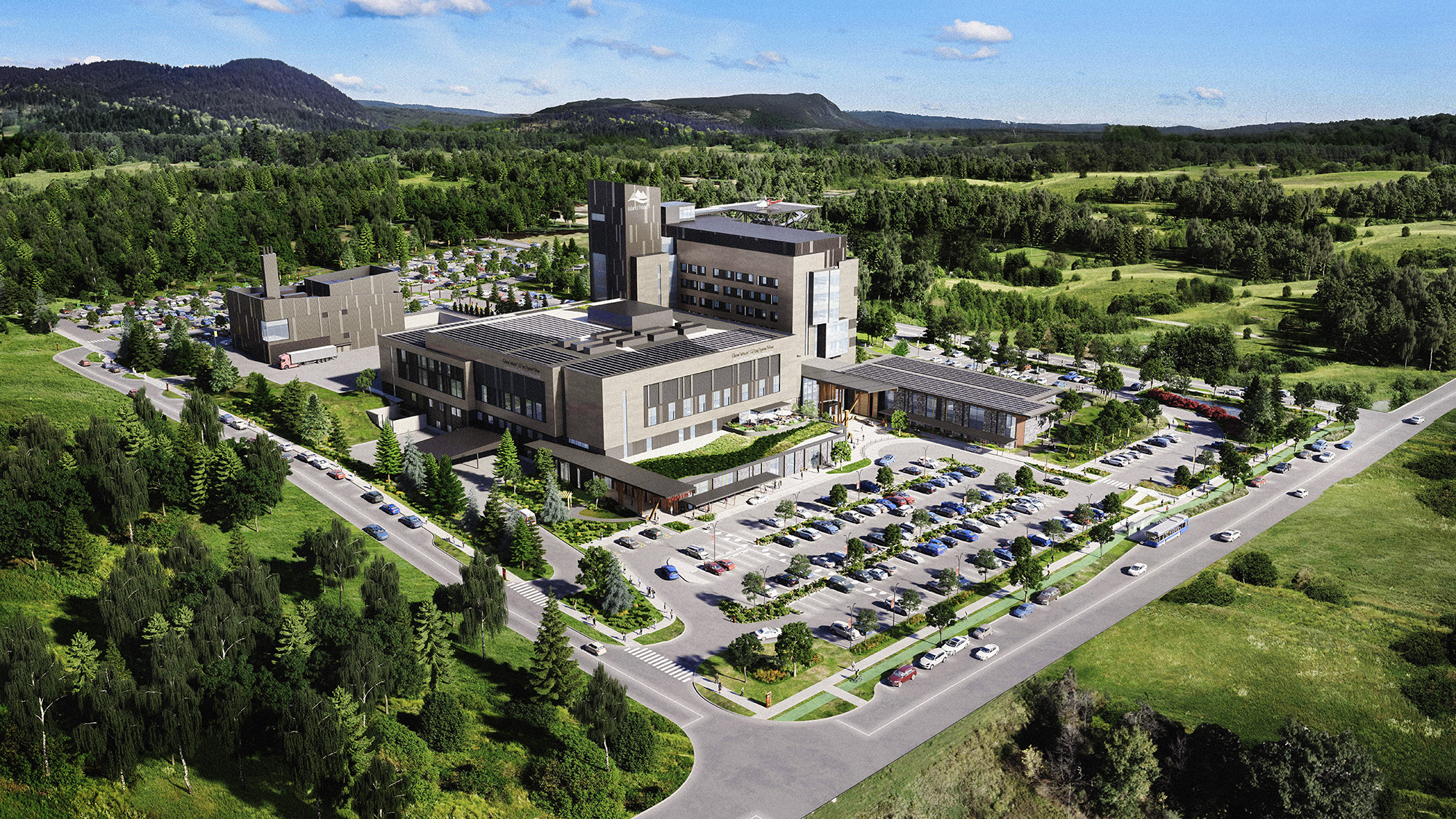
MDI translated the watershed strategy into the campus layout, grading, open space, rain gardens, enhanced wetlands, planting, and circulation. By building support among Island Health and the design team, the strategy became a key part of the successful proposal to design and construct the hospital. The completed design treats all rainwater on site and earned Salmon-Safe certification in 2025—the first awarded to a hospital in British Columbia.
Design and construction are being carried out through the Nuts’a’maat Alliance. MDI works regularly with the project’s Indigenous Advisory Council, Island Health’s clinical and operational teams, patient partners, municipal officials, engineers, and the construction team. This collaboration helps create a culturally welcoming landscape while ensuring that materials and details are practical, buildable, and aligned with the project’s schedule and budget.
Let the Watershed Shape the Campus
Watershed-Led Planning
Detailed hydrologic analysis revealed multiple subdrainage areas and showed how decisions made on the hospital site would affect Averill Creek and S’amunu Marsh downstream. MDI used these findings to guide the campus layout, grading, retained wetlands, rain gardens, and site-wide rainwater strategy.
Indigenous Collaboration
MDI works regularly with the project’s Indigenous Advisory Council and Cowichan Tribes. Their guidance centres Indigenous knowledge, reinforces water as a living system, and helps shape a landscape that feels culturally welcoming and connected to the land, plants, and water of the Quw’utsun Valley.
Healing Landscapes for People
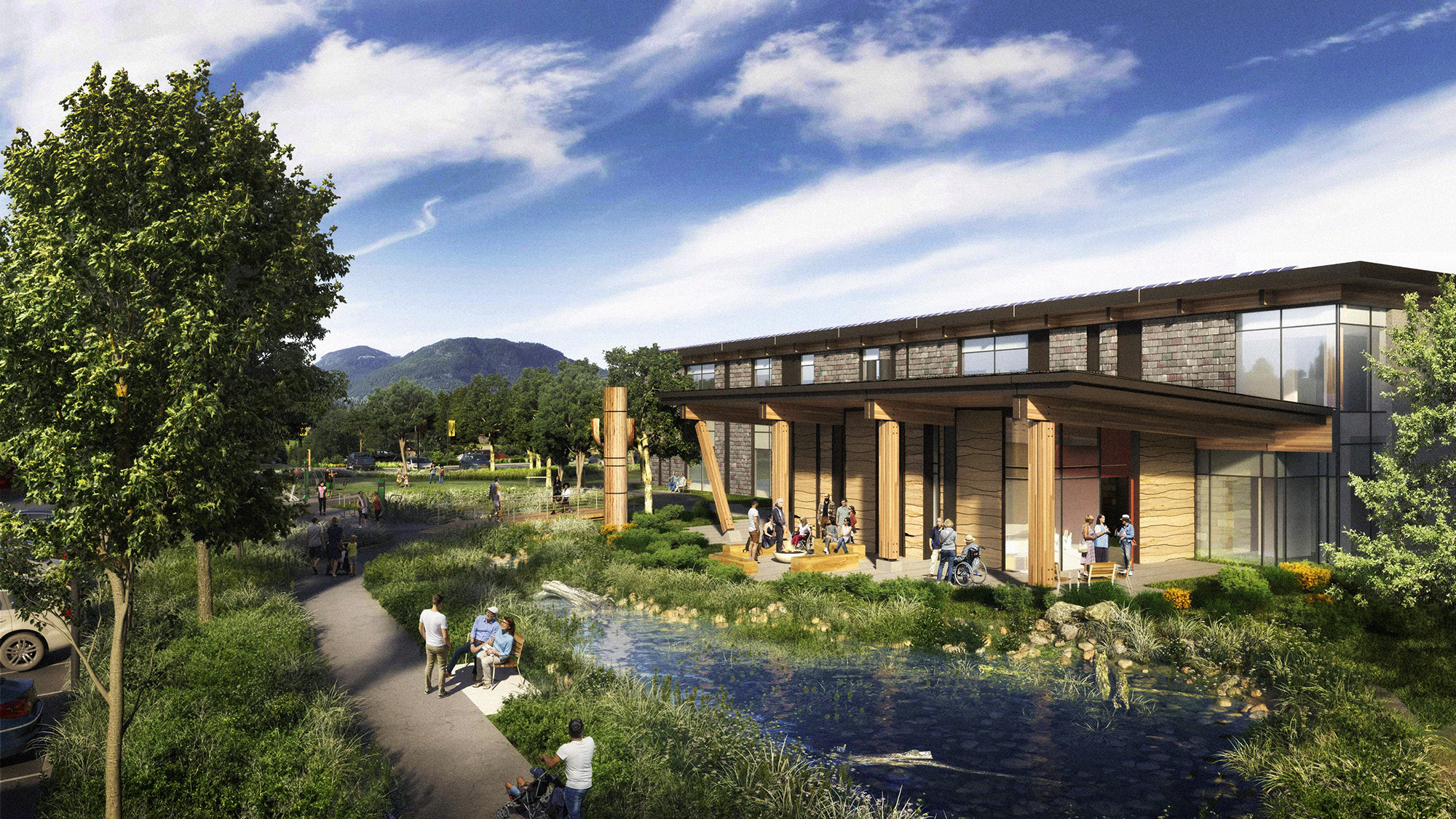
Retained wetlands, rain gardens, native and Indigenous plants, healing gardens, accessible wellness paths, and a forest meditation loop bring functioning natural systems into the hospital campus. These spaces provide green views, places for gathering and reflection, and direct contact with nature for patients, families, and staff.
Nuts’a’maat Alliance Delivery
Island Health, the design team, and the constructor work as one integrated team. MDI coordinates with clinicians, operational teams, patient partners, municipal officials, engineers, and trades so landscape decisions respond to care, maintenance, schedule, and budget. The collaborative methods developed through this project now inform MDI’s work on other complex projects.
MDI’s role extends from watershed analysis and site planning through detailed design and construction. By bringing together natural hydrology, Indigenous guidance, healing, hospital operations, and project delivery, the landscape manages water as a living system while creating a practical and culturally welcoming campus. The project demonstrates how early landscape leadership can shape the entire site plan and remain intact through construction.
Similar Projects
.jpeg)