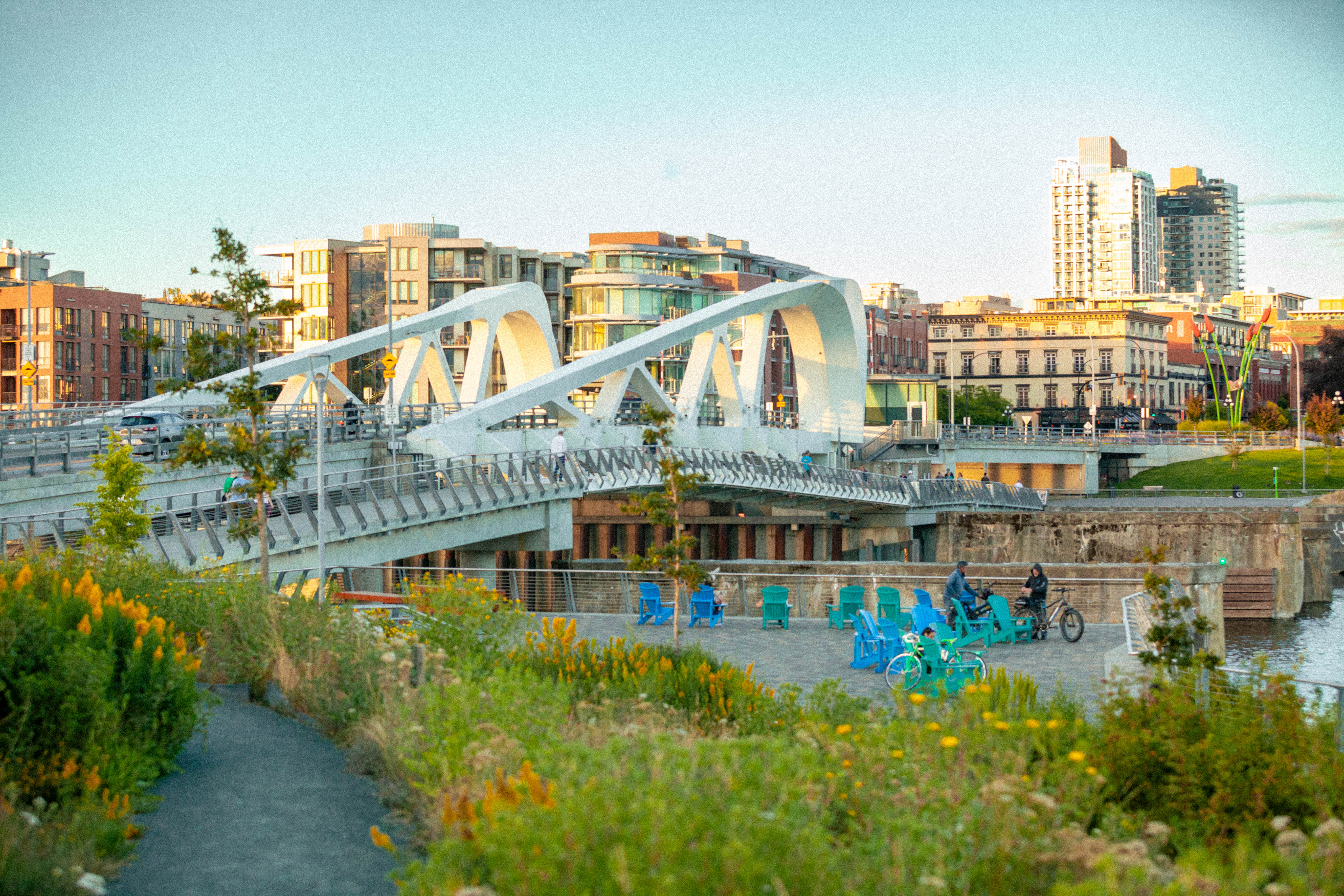




Fisherman's Wharf Park
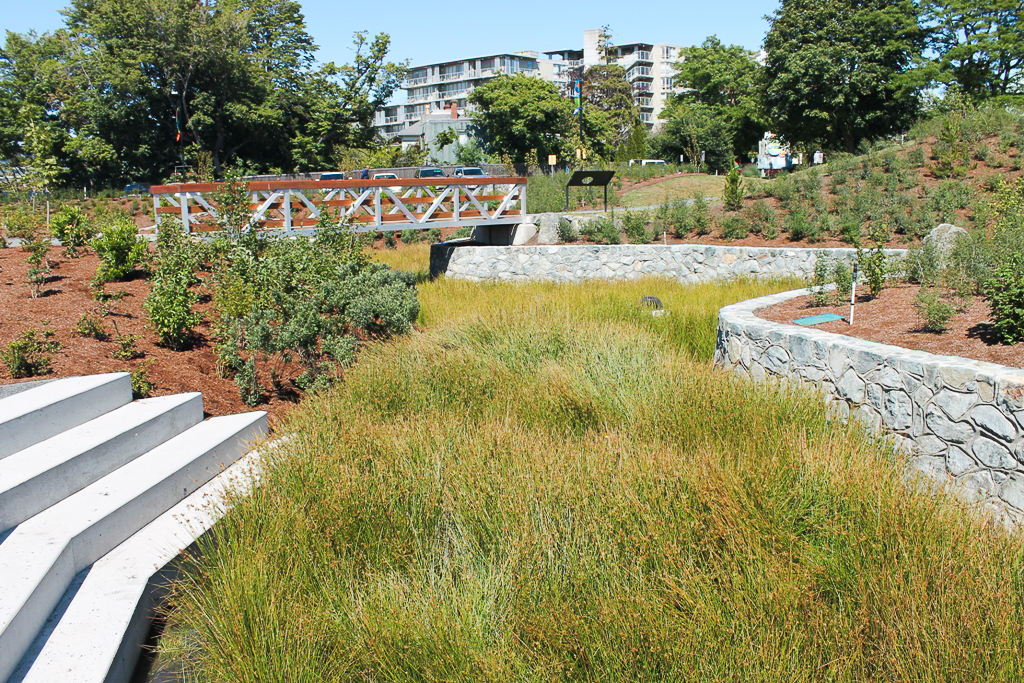
Fisherman’s Wharf Park transforms an underused playing field beside Victoria’s Inner Harbour and float-home community into a more varied waterfront landscape. The City’s goals included cleaner water, better habitat, and a park that offered more ways for the neighbourhood to gather, move, and spend time outdoors.
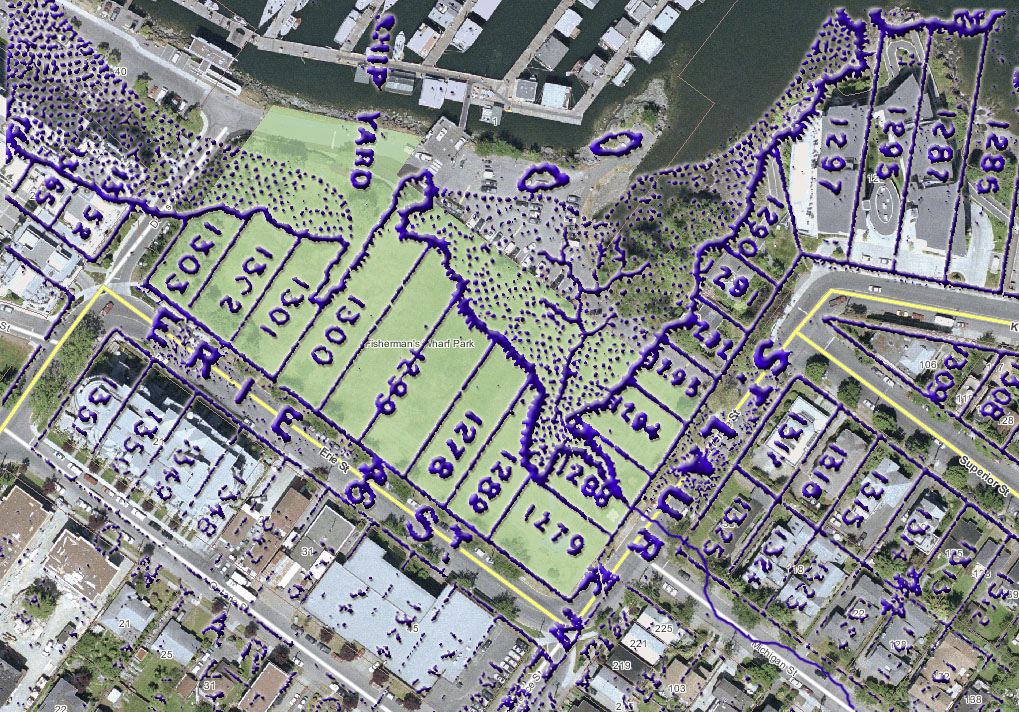
Working with KWL, MDI tested a proposal to daylight a storm pipe buried about six metres below grade. The analysis showed that deep excavation would create steep slopes, reduce usable park space, and increase costs associated with contaminated soils. The team instead intercepted two shallower storm drains and brought the water to the surface through a large rain garden.
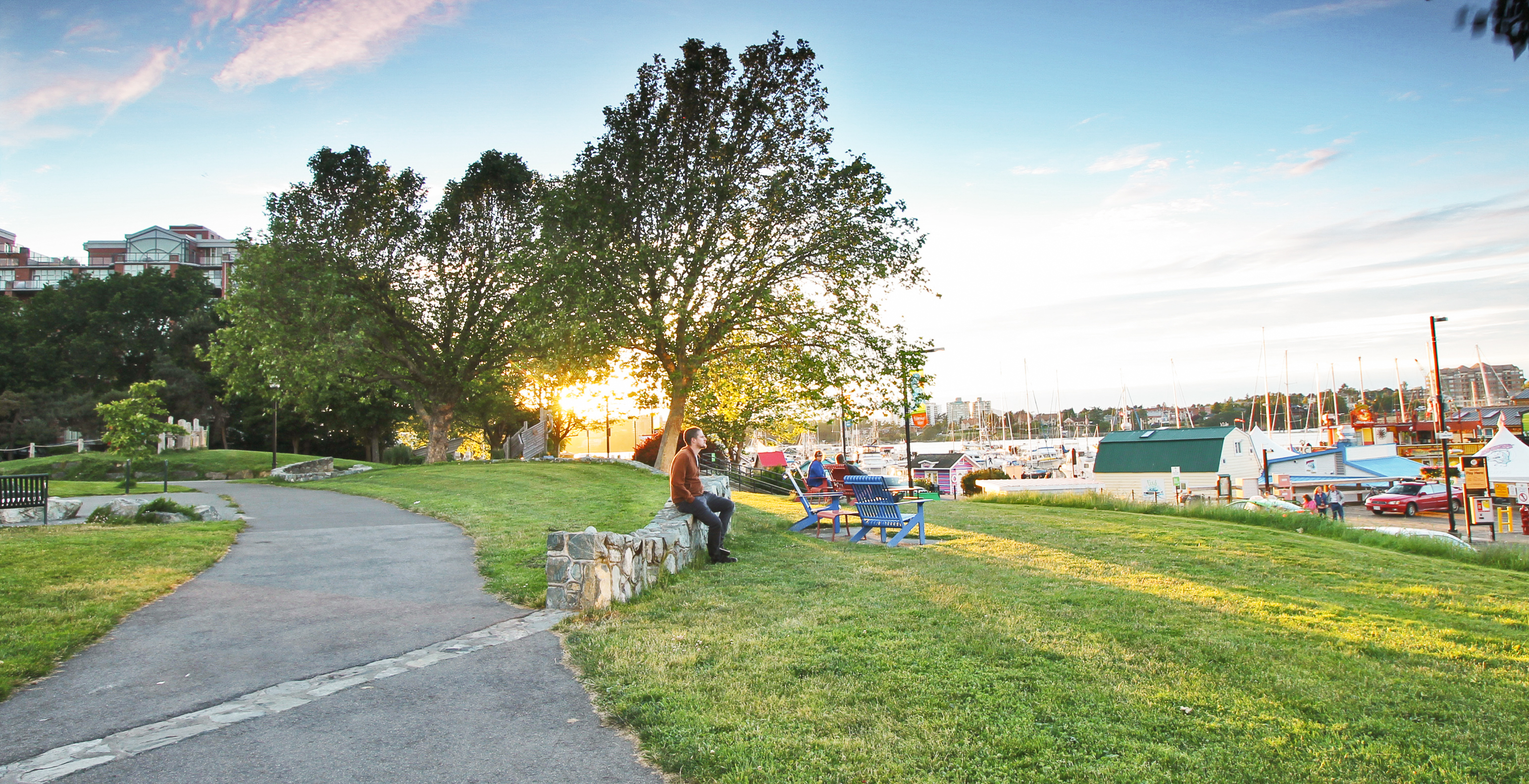
Paths, landform, planting, lawn, and gathering spaces are organized around this nature-based water system. Completed in 2012, the park filters runoff from approximately 14,250 square metres of surrounding impervious area before it reaches the Inner Harbour, allowing one landscape to support recreation, habitat, and water quality.
Let Water Give the Park Its Form
A Better Park Began by Questioning the Brief
The original stream-daylighting concept would have required a deep ravine through the park. MDI and KWL compared the alternatives and found that a surface-based rain garden could protect more usable space while delivering stronger water-quality, habitat, and cost outcomes.
Keep Water at the Surface
Two shallower storm drains were intercepted and directed into a large planted rain garden. This avoided major excavation in contaminated soils and turned rainwater management into a visible part of the park’s landform, paths, planting, and everyday use.
A Rain Garden as the Park’s Living Centre
The rain garden is not a technical feature set apart from recreation. It organizes the park, supports habitat, and changes with rainfall and the seasons, while lawns, paths, and gathering areas provide a range of experiences around it.
Cleaner Water at the Harbour’s Edge
The completed landscape continues to slow and filter runoff from approximately 14,250 square metres of surrounding streets and hard surfaces. Its surface-based design keeps the treatment process accessible and visible before water reaches the Inner Harbour.
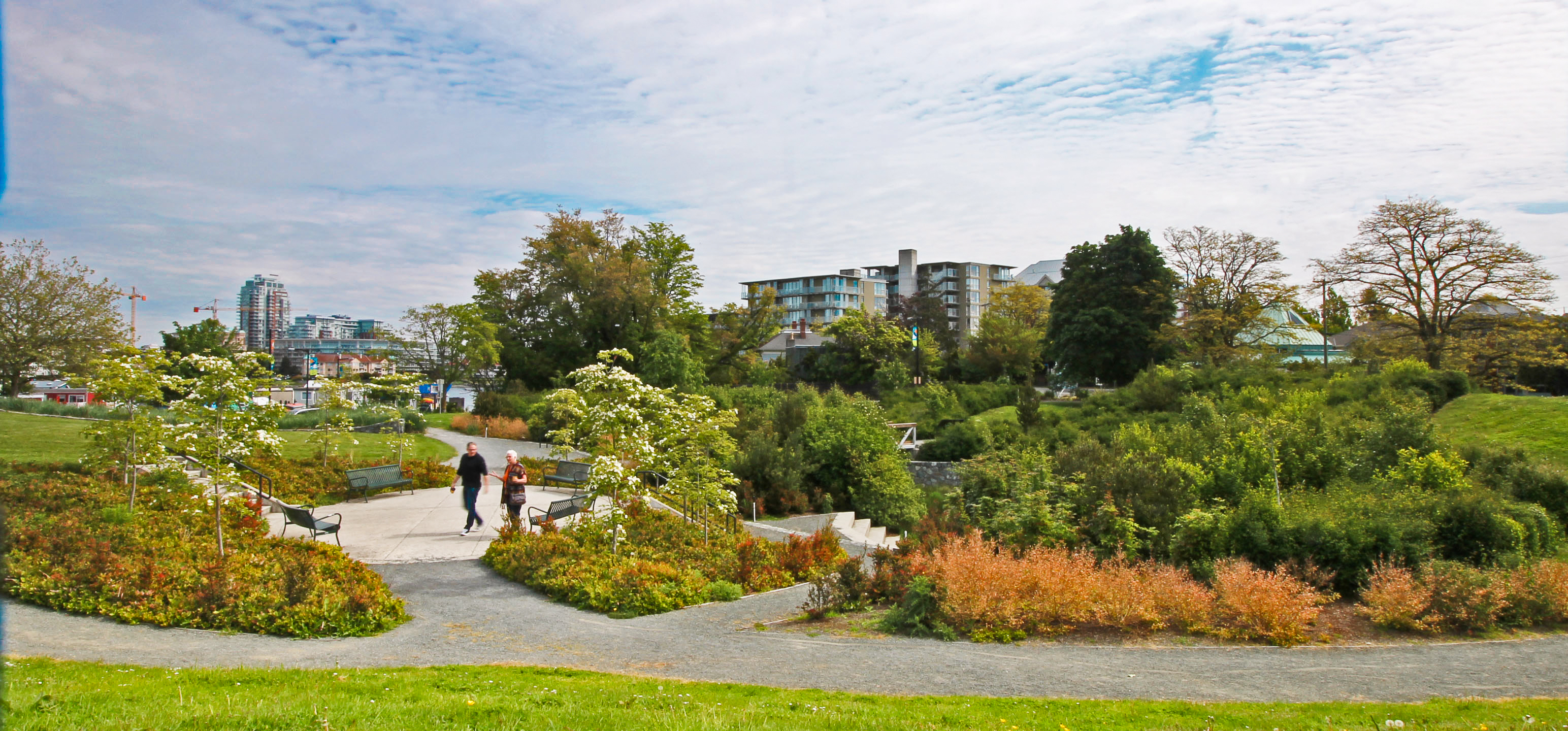
Fisherman’s Wharf Park shows how a nature-based solution can improve both ecological performance and public experience. By challenging the original engineering concept, MDI helped create a more usable waterfront park whose defining landscape also cleans water and supports habitat.