



Marigold Development
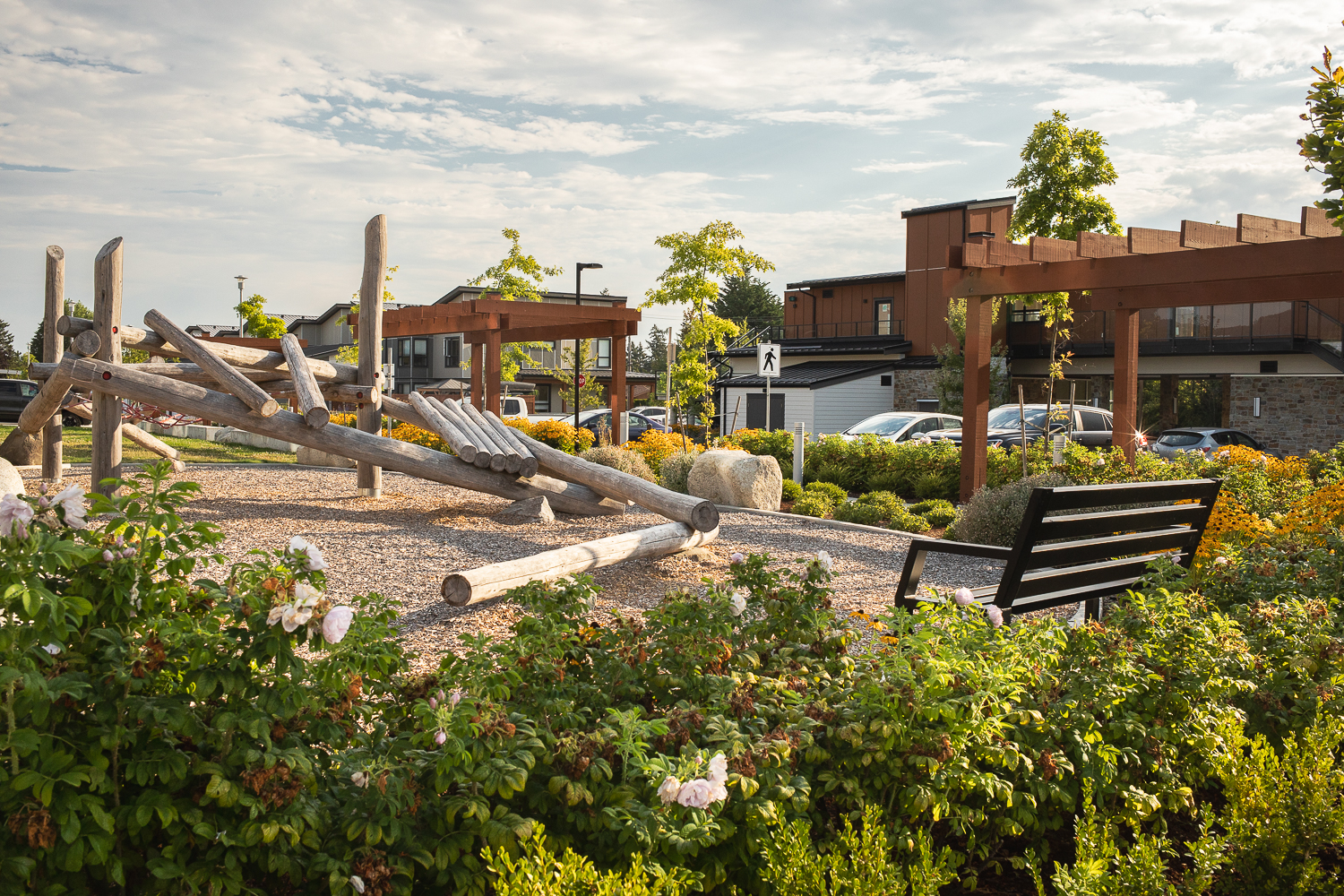
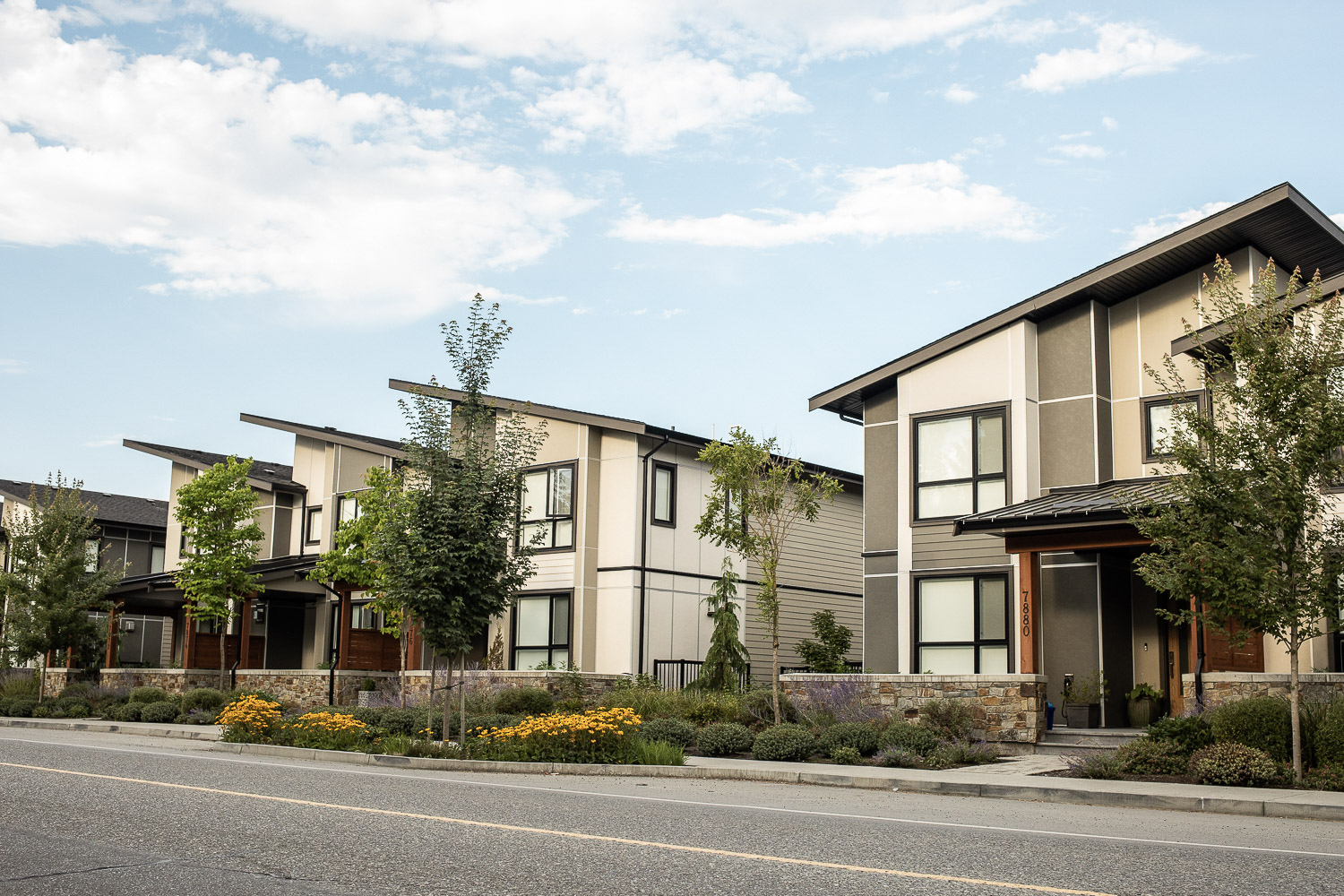
Marigold transforms a former seven-acre nursery in Saanichton into a mixed-use neighbourhood with housing, commercial space, a community park, and connected pedestrian routes. MDI used the site’s planted history and its relationship to a nearby marine estuary as starting points for a landscape that supports everyday life while improving how water moves through the development.
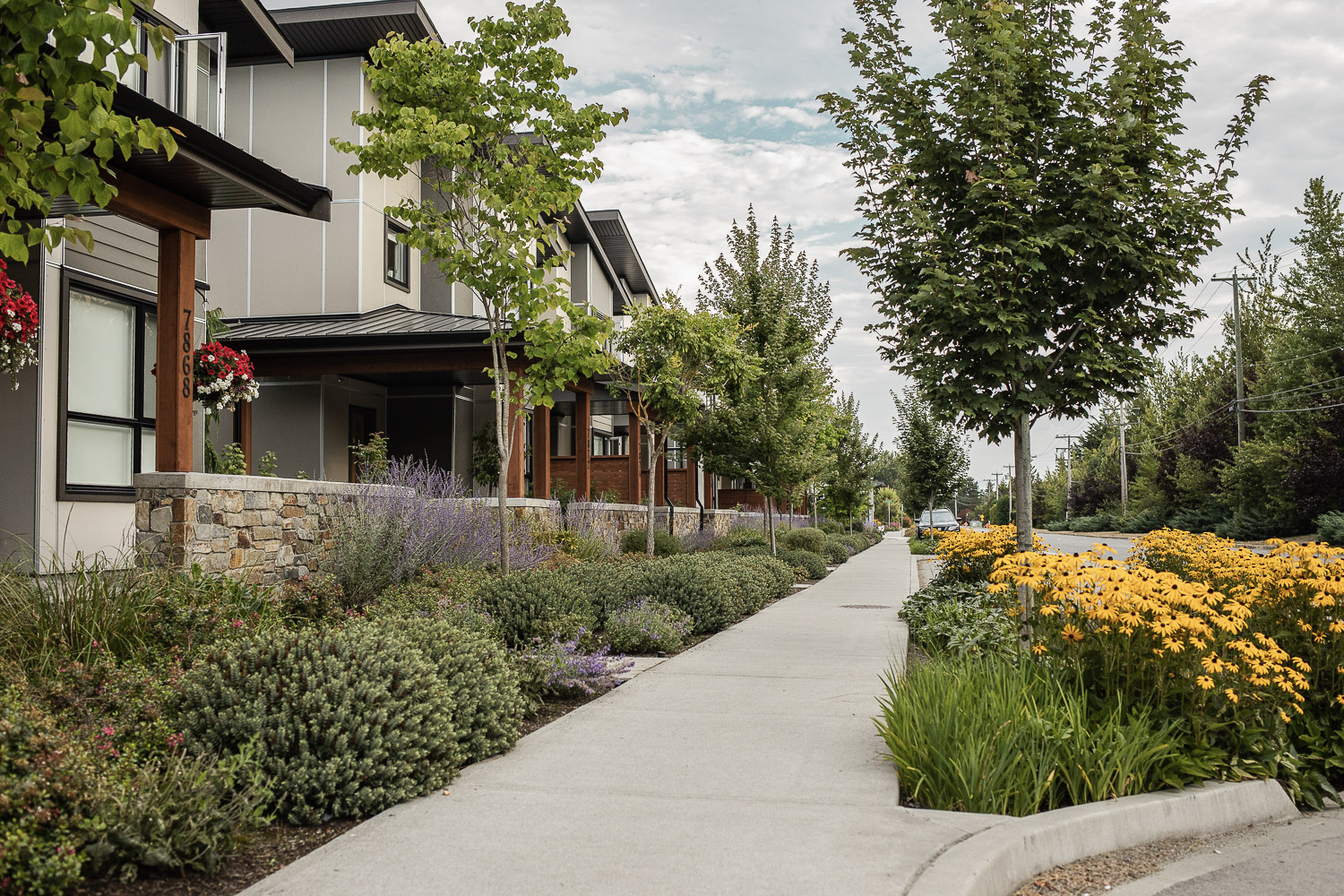
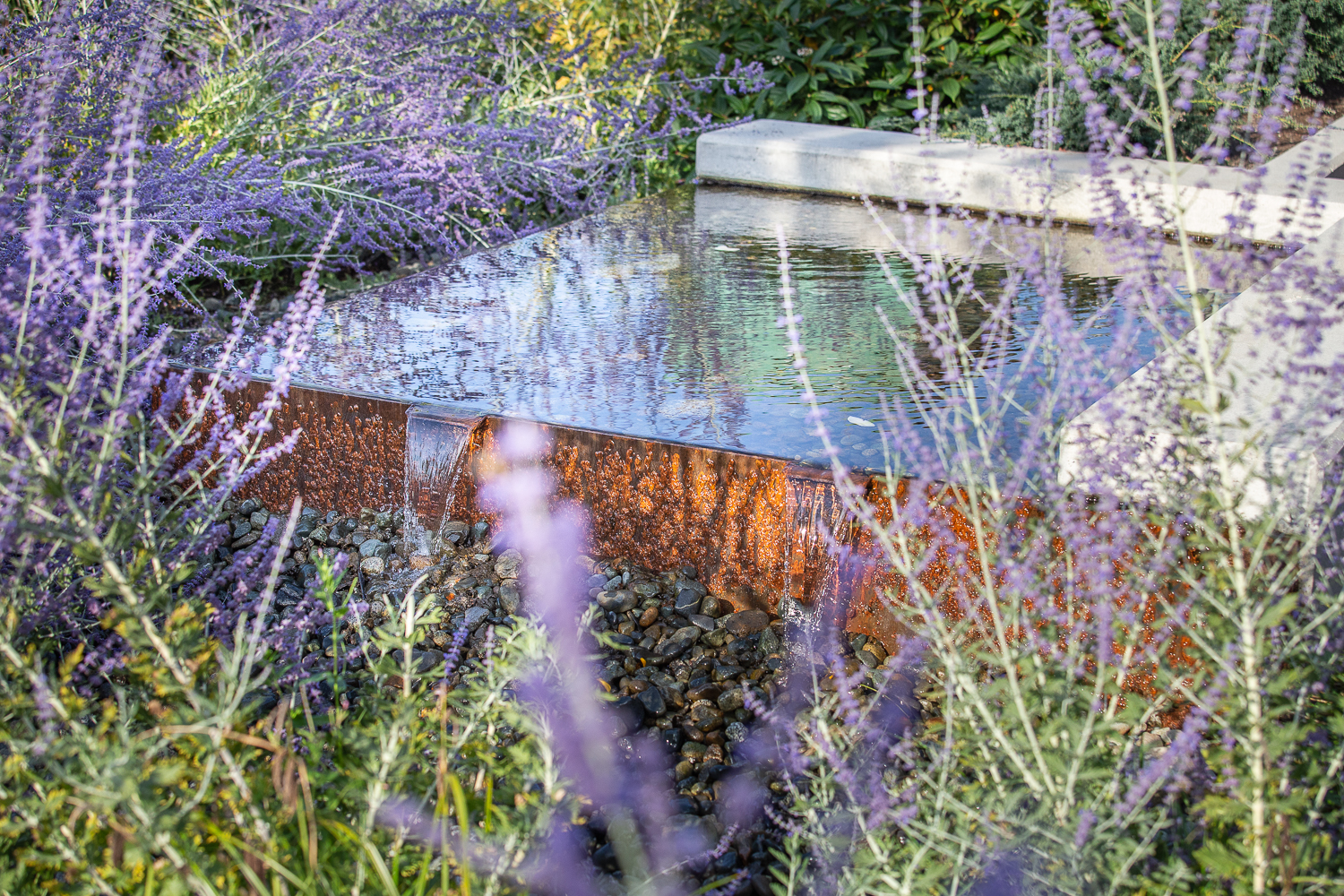
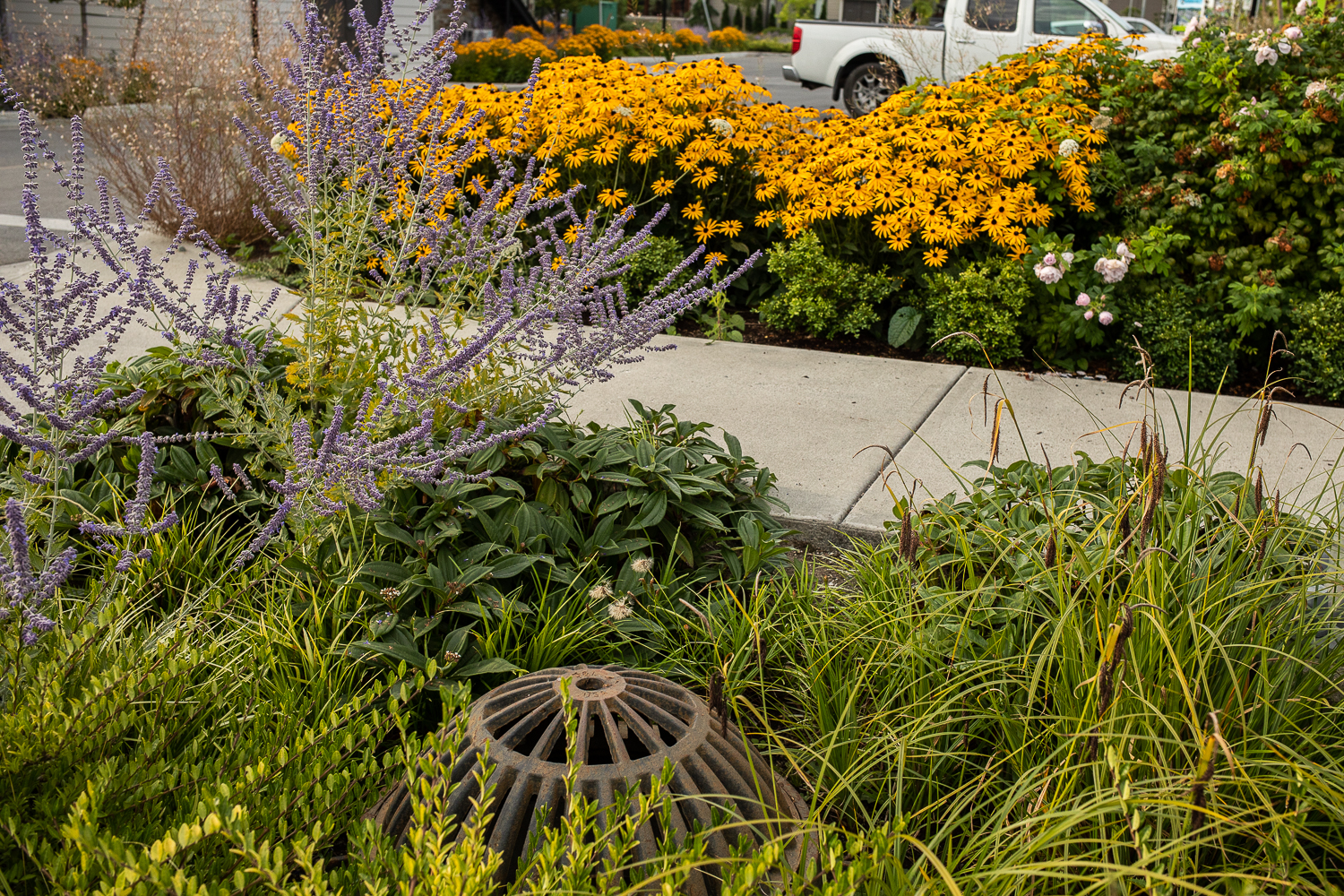
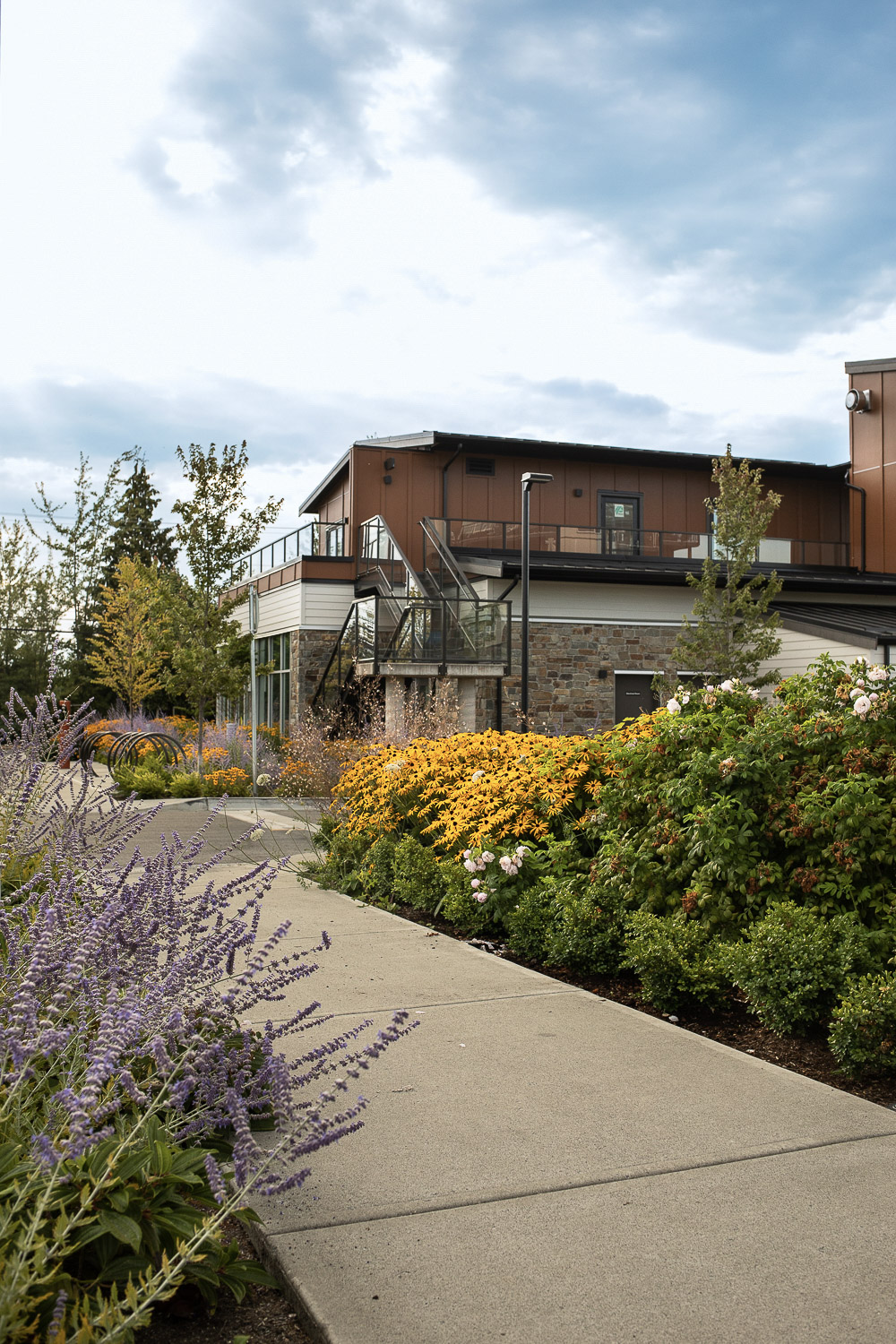
Rain gardens, planted corridors, grading, and a tree-covered berm form a connected nature-based system. They slow and filter runoff, add habitat for pollinators, and create a greener edge along the Pat Bay Highway. The berm also reduces traffic noise, showing how one landscape element can improve ecological performance and residential comfort at the same time.
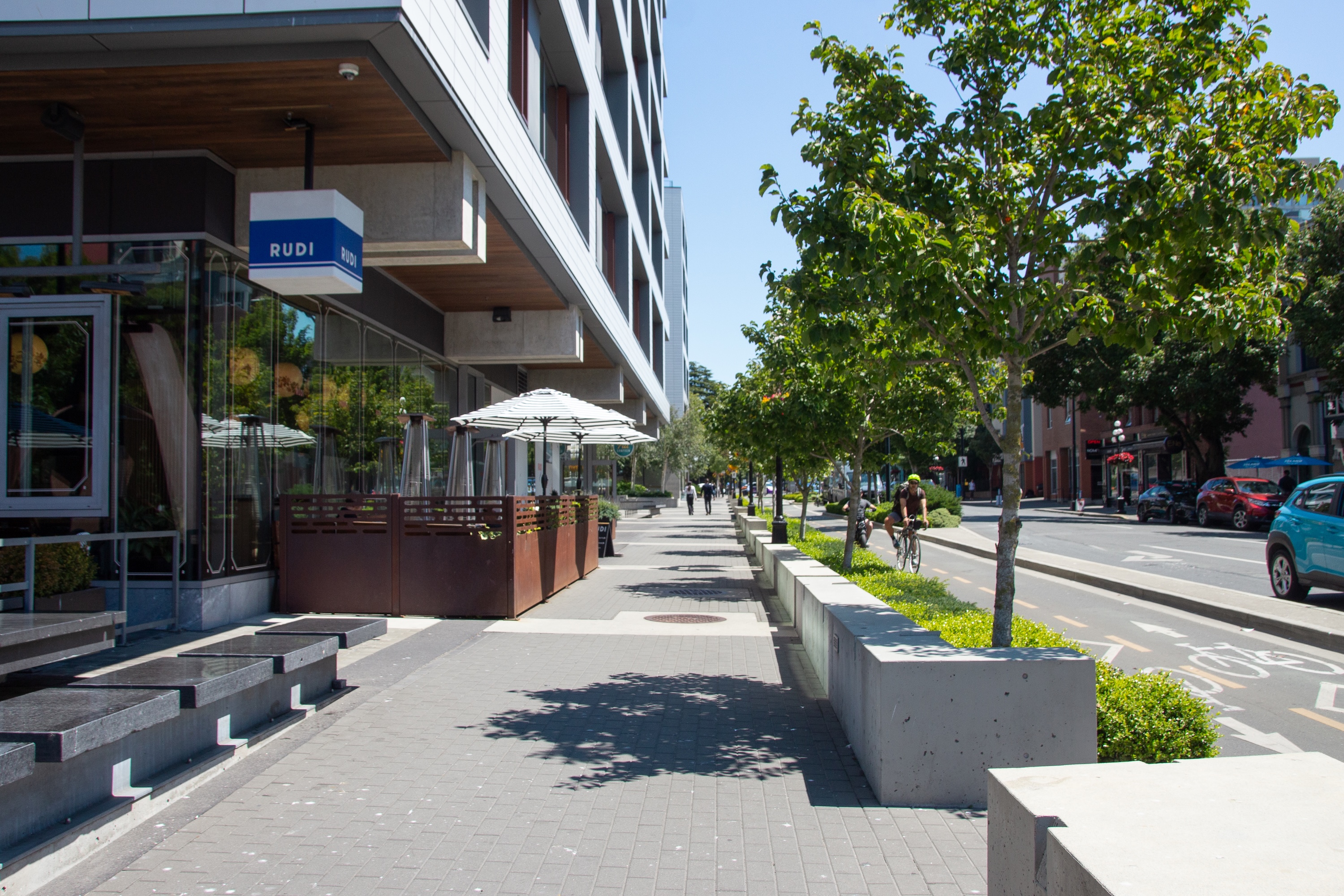
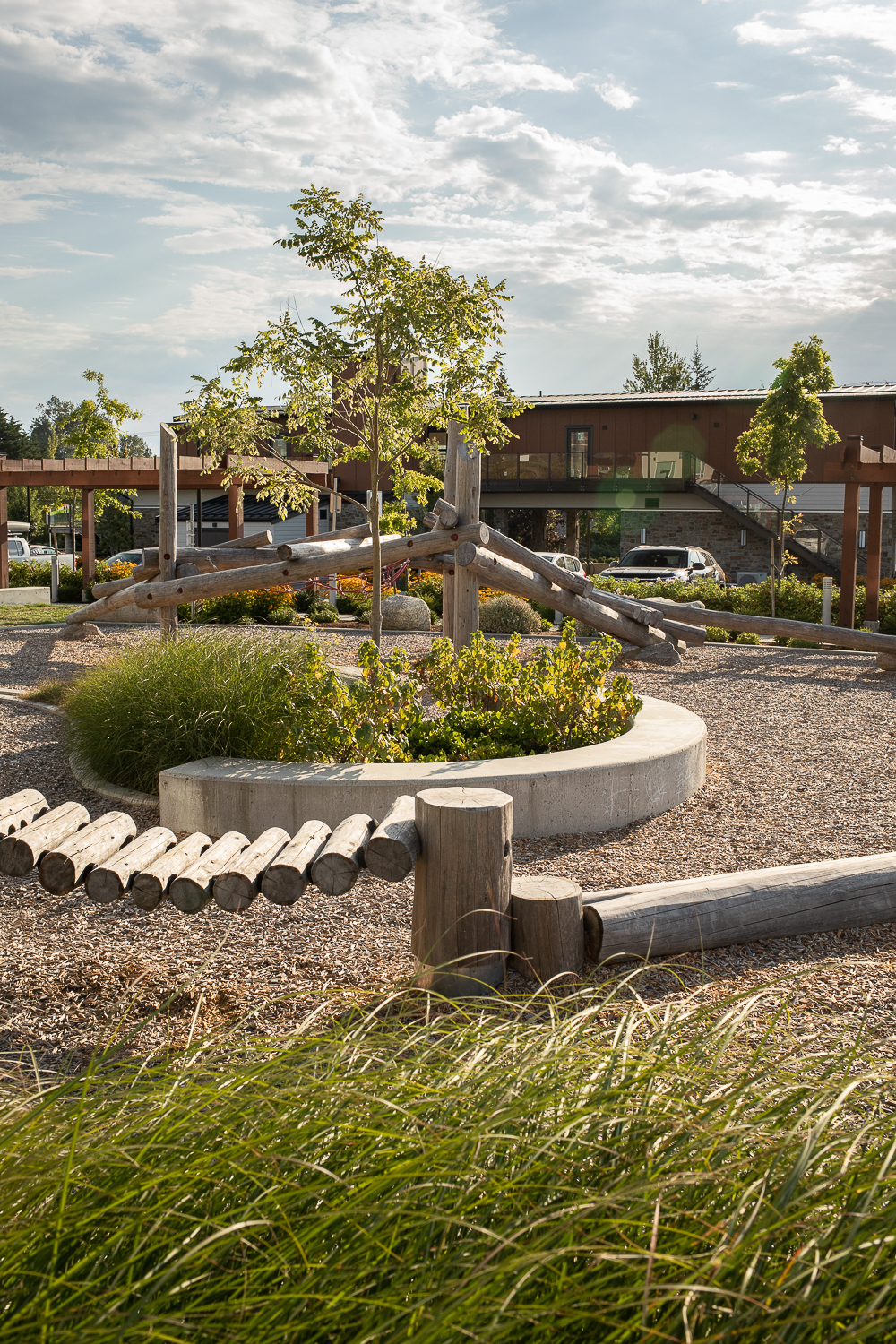
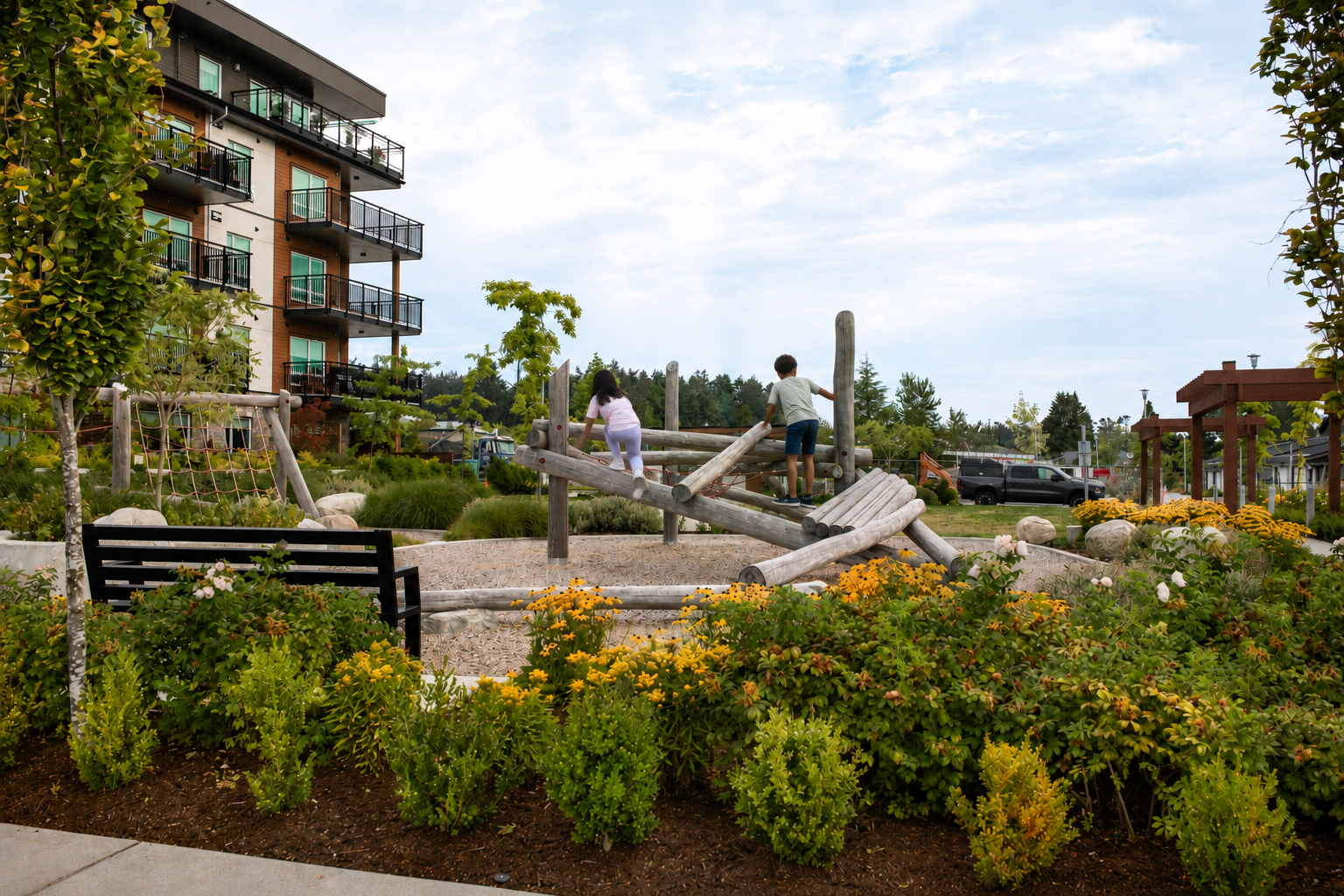
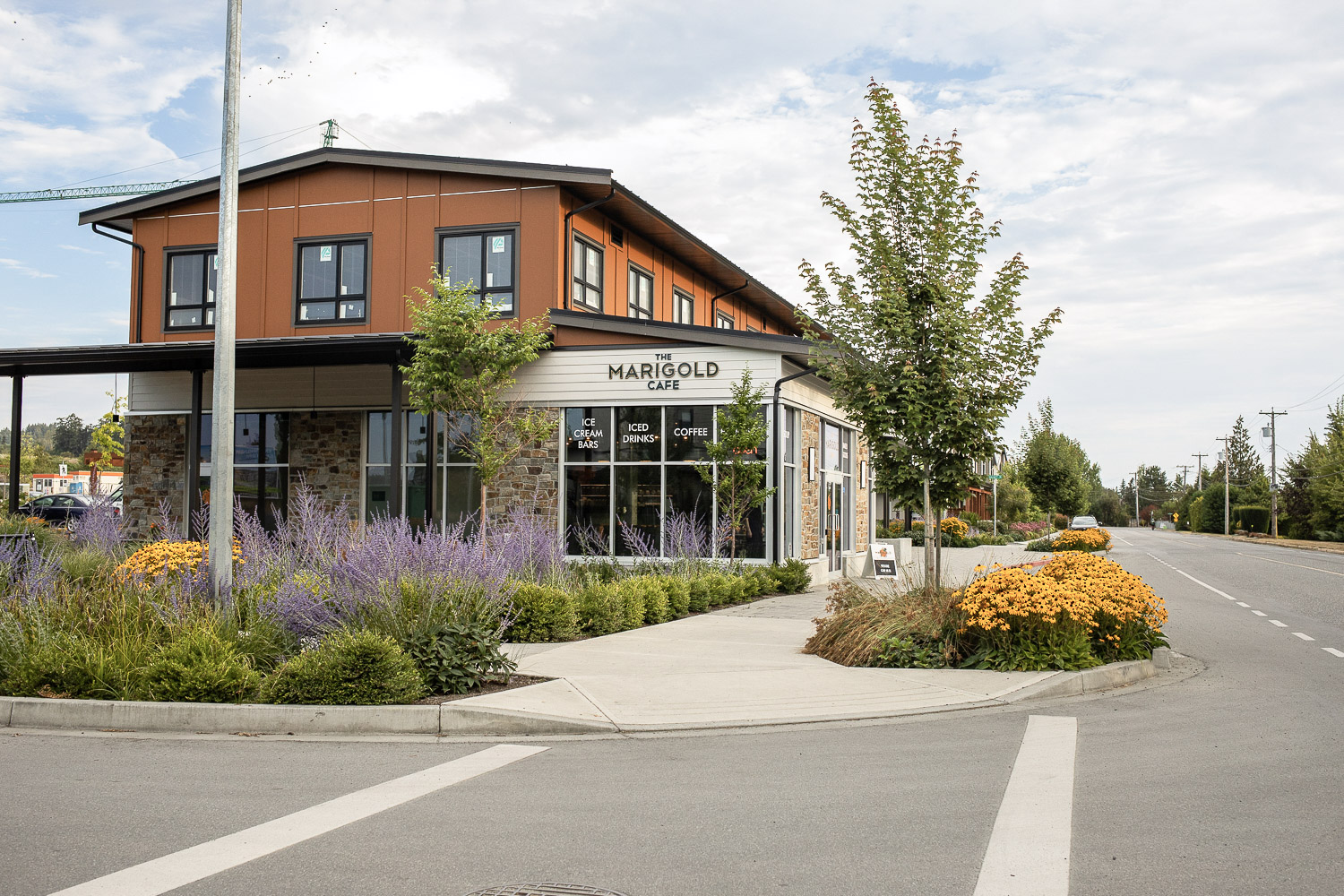
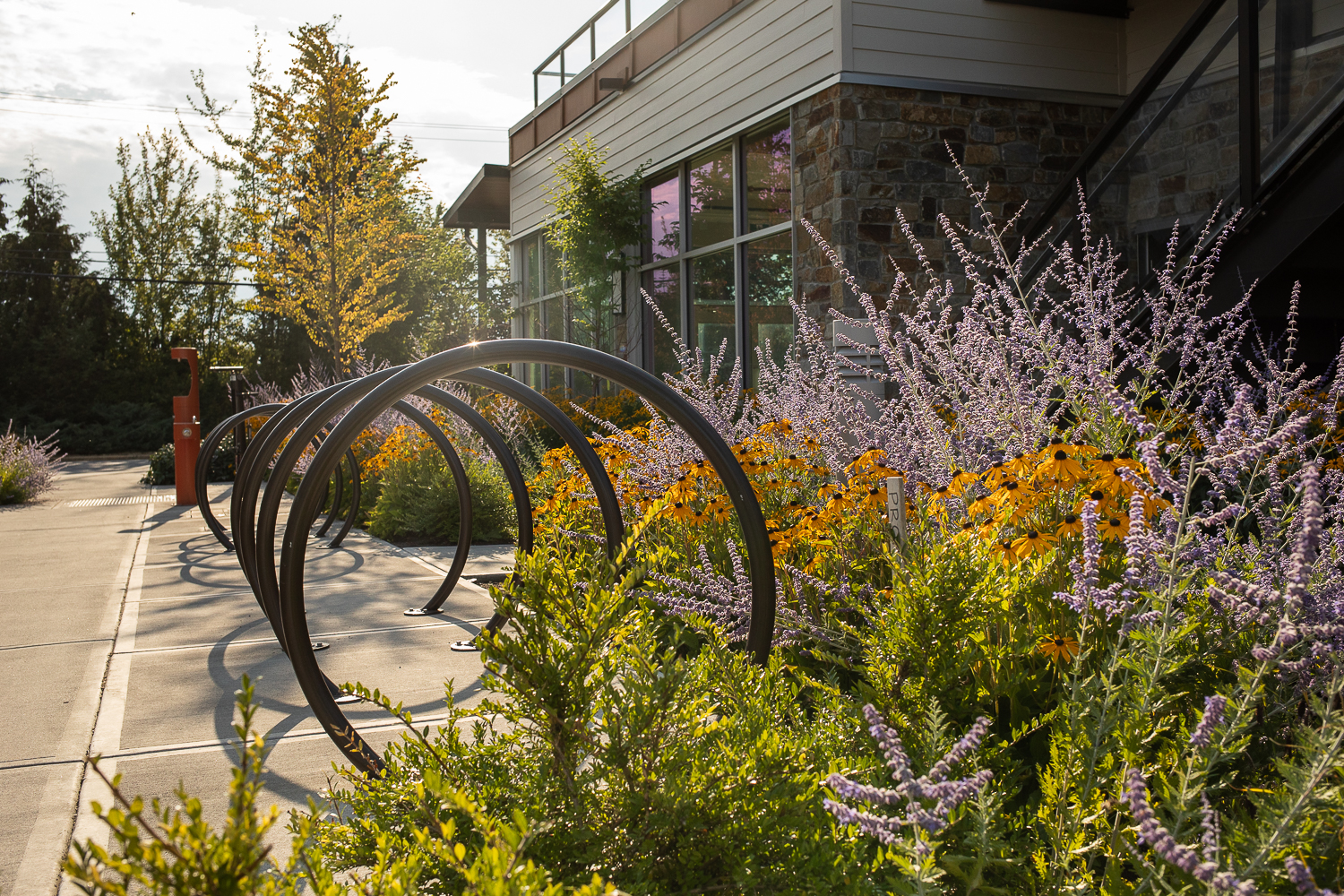
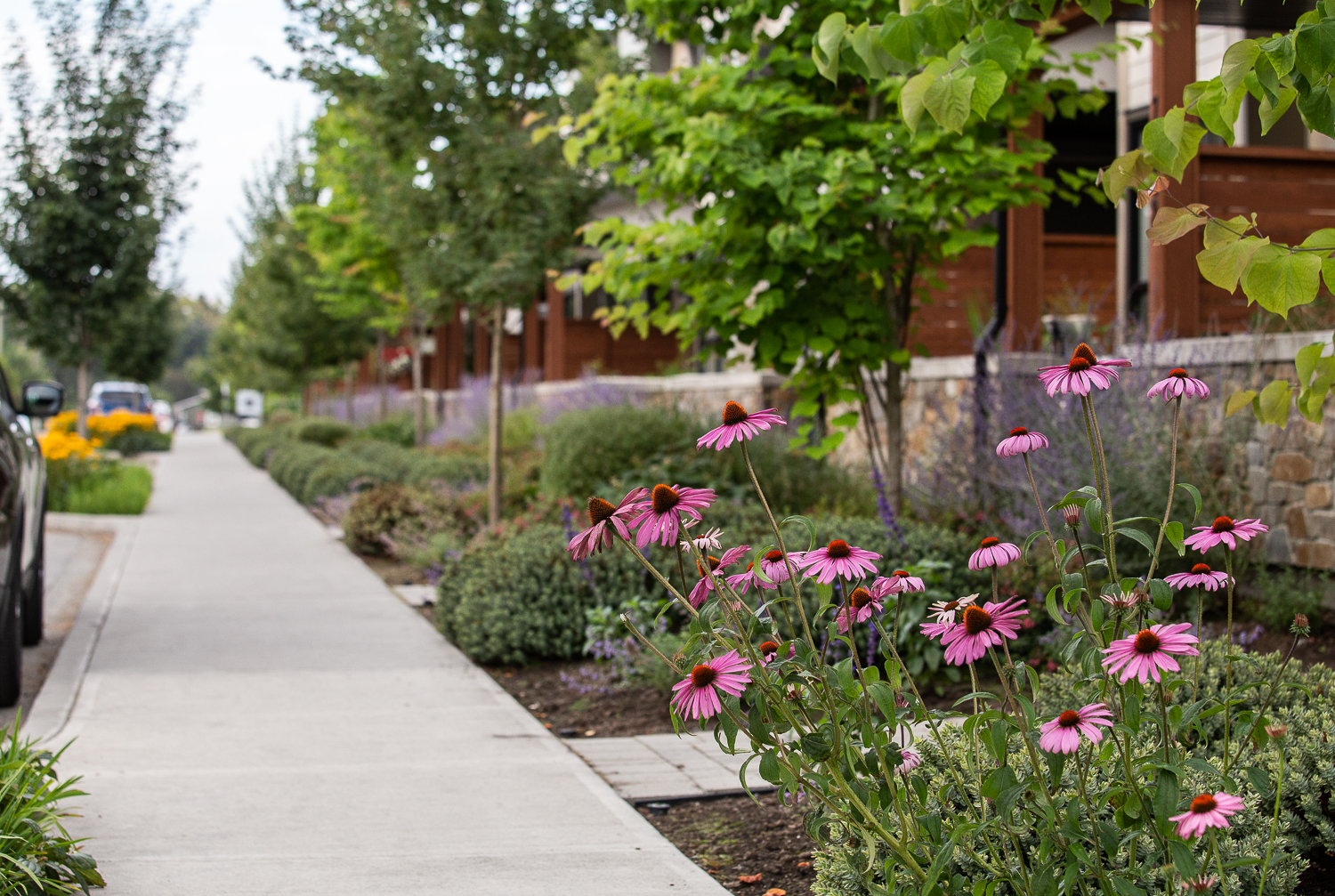
A community park, play spaces, commercial patios, street trees, bicycle facilities, and accessible routes bring people into contact with planting and seasonal change across the site. The result is a practical neighbourhood framework where water, canopy, habitat, movement, and shared space reinforce one another.
Build the Neighbourhood Around Living Systems
The Estuary Begins Upstream
Runoff leaving the site ultimately affects a nearby marine estuary. Treating that relationship as a design driver allowed MDI to coordinate grading, streets, planting, and open space around water quality from the beginning.
Connect Water, Canopy, and Everyday Routes
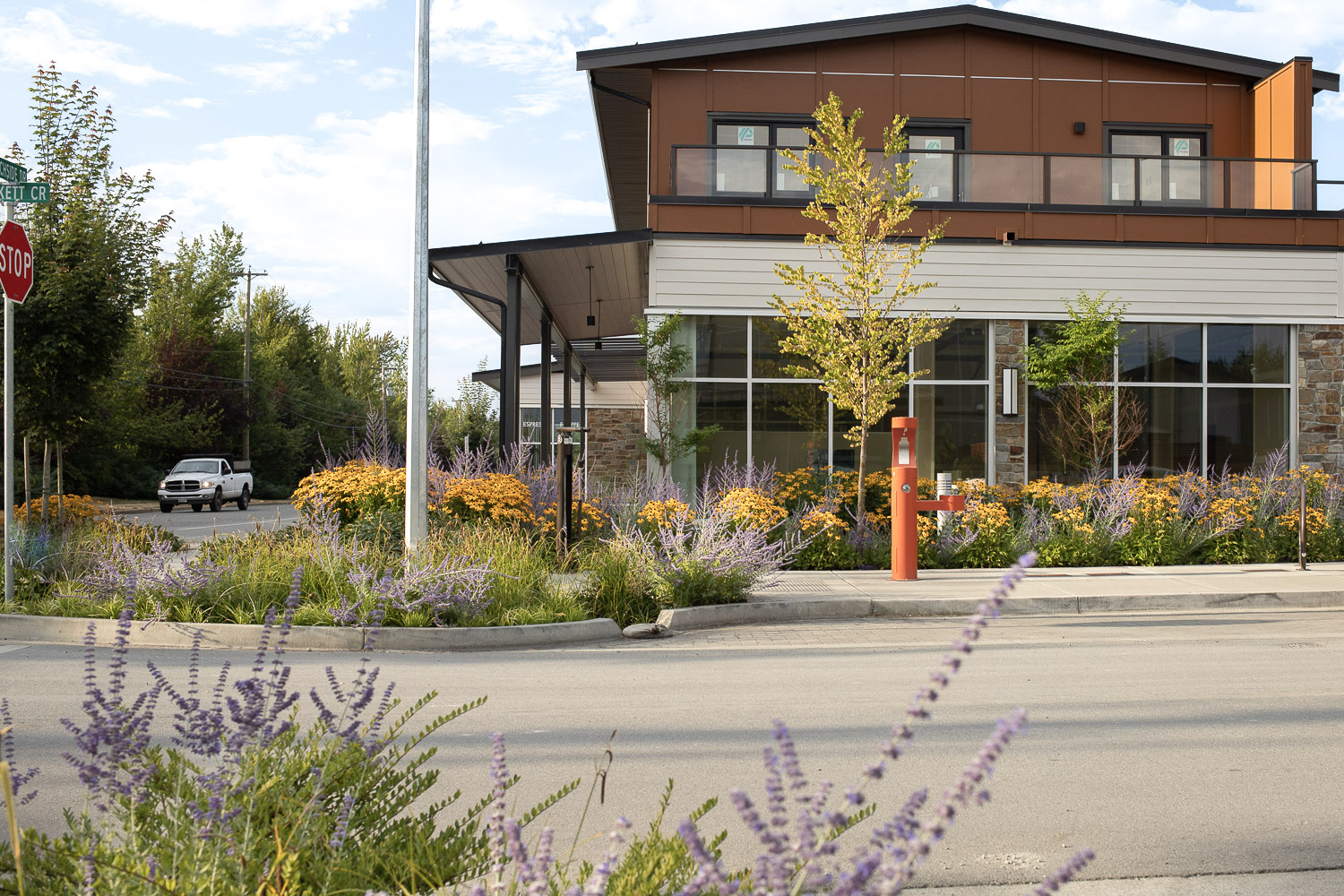
Rain gardens, planted corridors, street trees, parks, and pedestrian routes form a connected green network. The system cleans runoff, supports pollinators, and brings shade and seasonal experience into the routes people use every day.
Give Each Landscape Element More Than One Job
The tree-planted berm reduces traffic noise, strengthens the highway edge, adds habitat, and contributes to the site’s rainwater strategy. Across the development, functional requirements are used to create a more comfortable and ecologically useful landscape.
Design for Growth and Long-Term Care
Drought-tolerant and site-adapted planting, surface-based rainwater systems, and clear pedestrian connections were selected for long-term function. As trees and planted areas mature, they will strengthen habitat, shade, the highway buffer, and the character of shared spaces.
Marigold shows how a relatively compact mixed-use development can use nature-based systems to improve daily life and downstream water quality. MDI connected rainwater, planting, habitat, movement, and shared space in a landscape designed to become richer as it matures.
Similar Projects